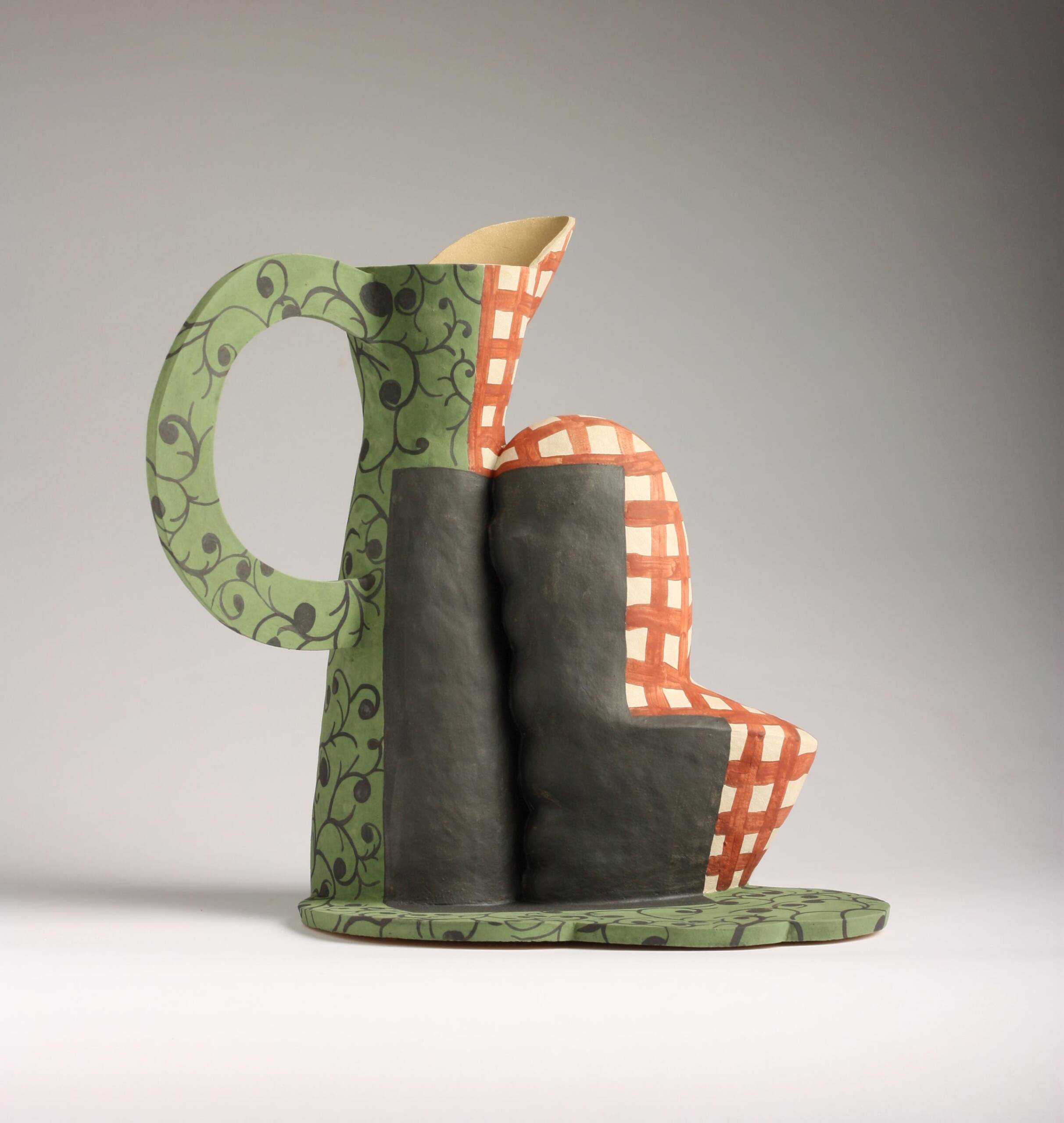
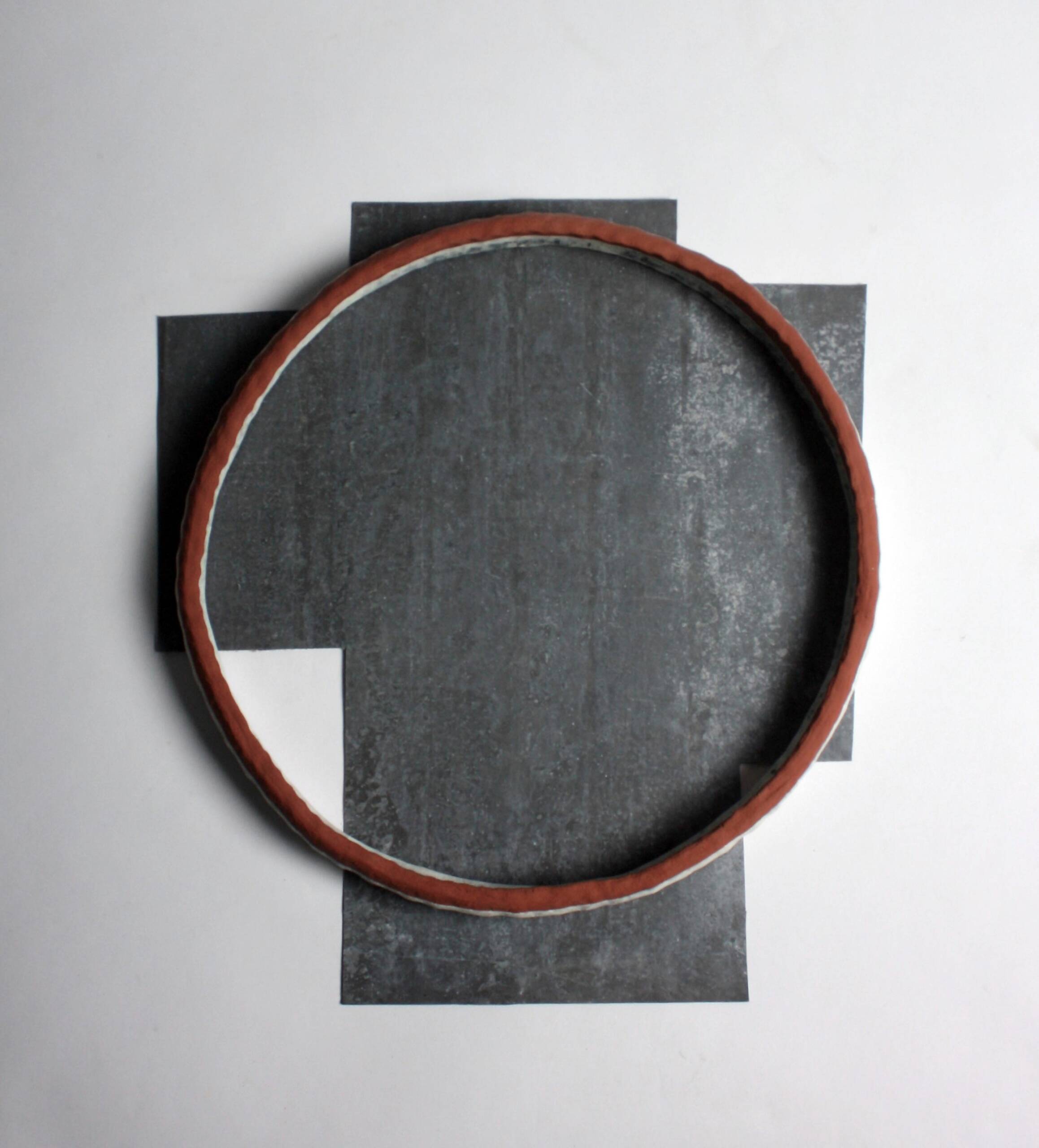

“My work bears traces of my american origins, of my life in France, my many journeys, my studies of architecture and classical and folk art, tracking down motifs, colours, smells and ideas that are different from our own. The presence of an object, its relationship to our everyday lives or to a rediscovered tradition and the dialogue between things is what particularly interests me.”
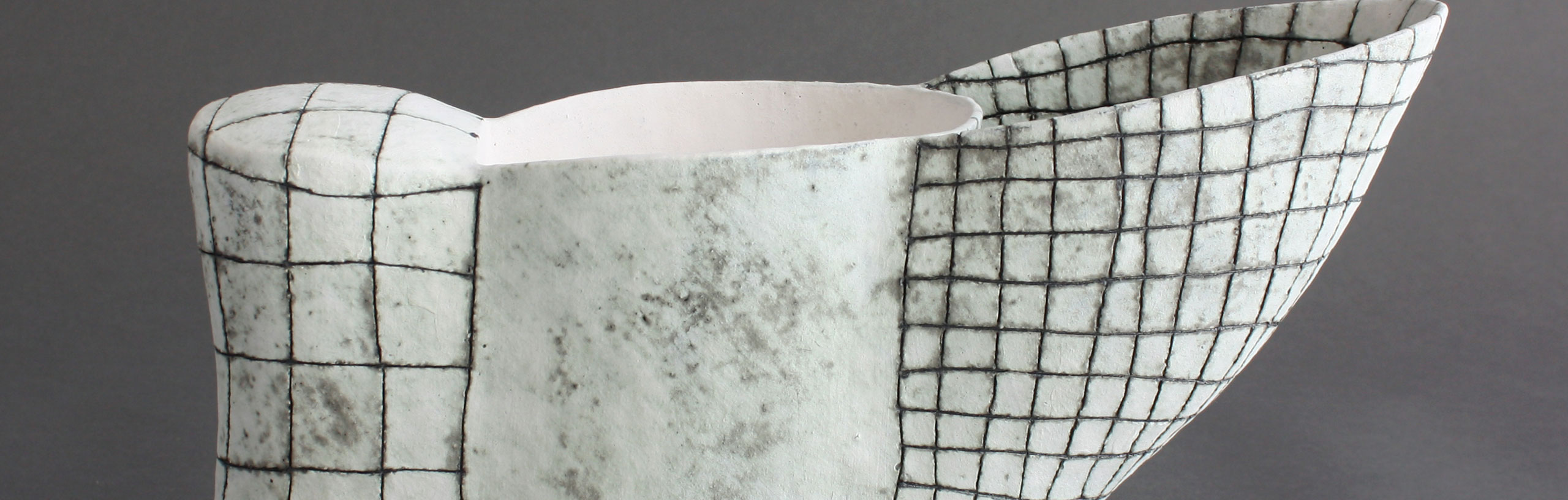
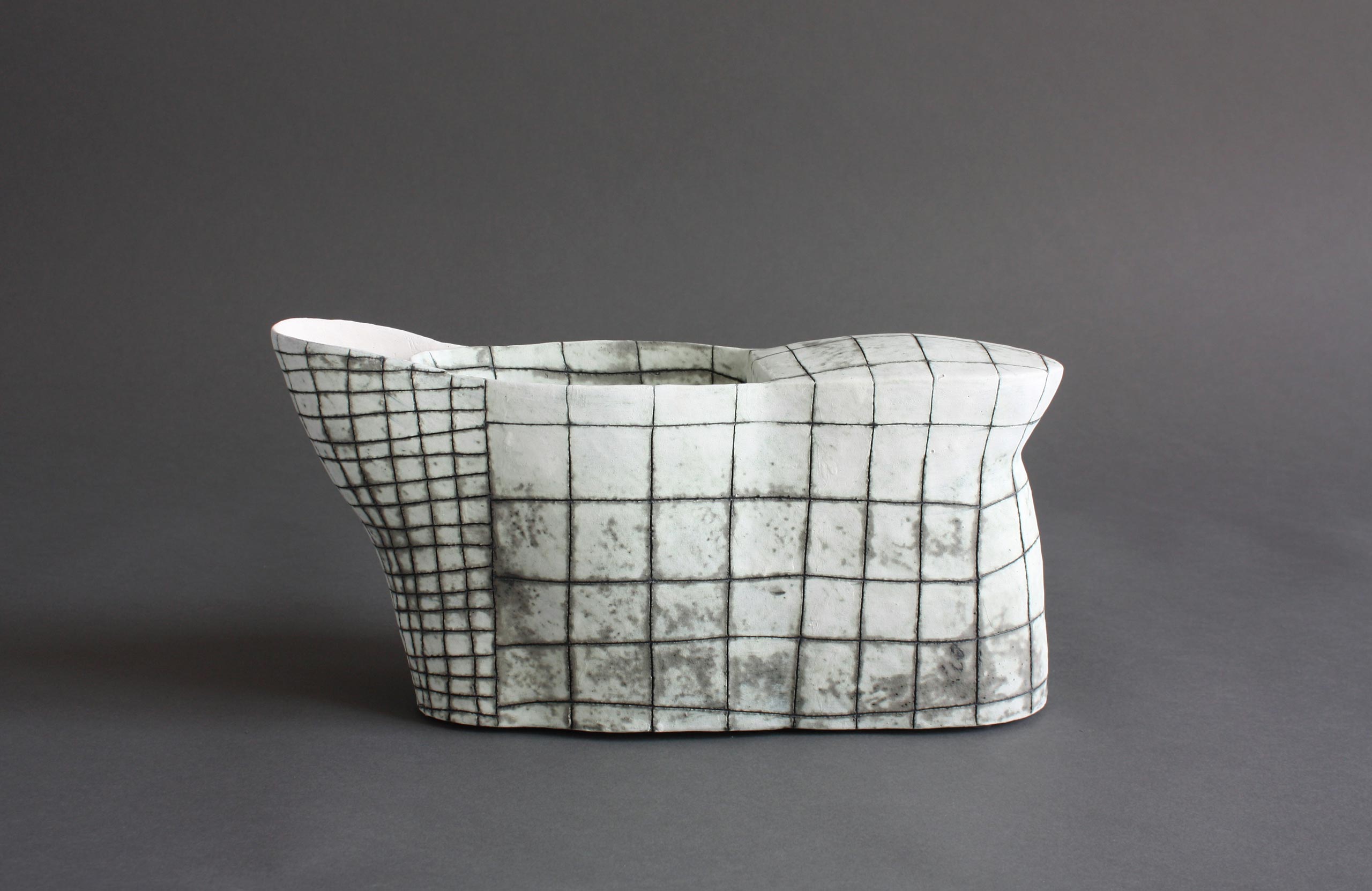
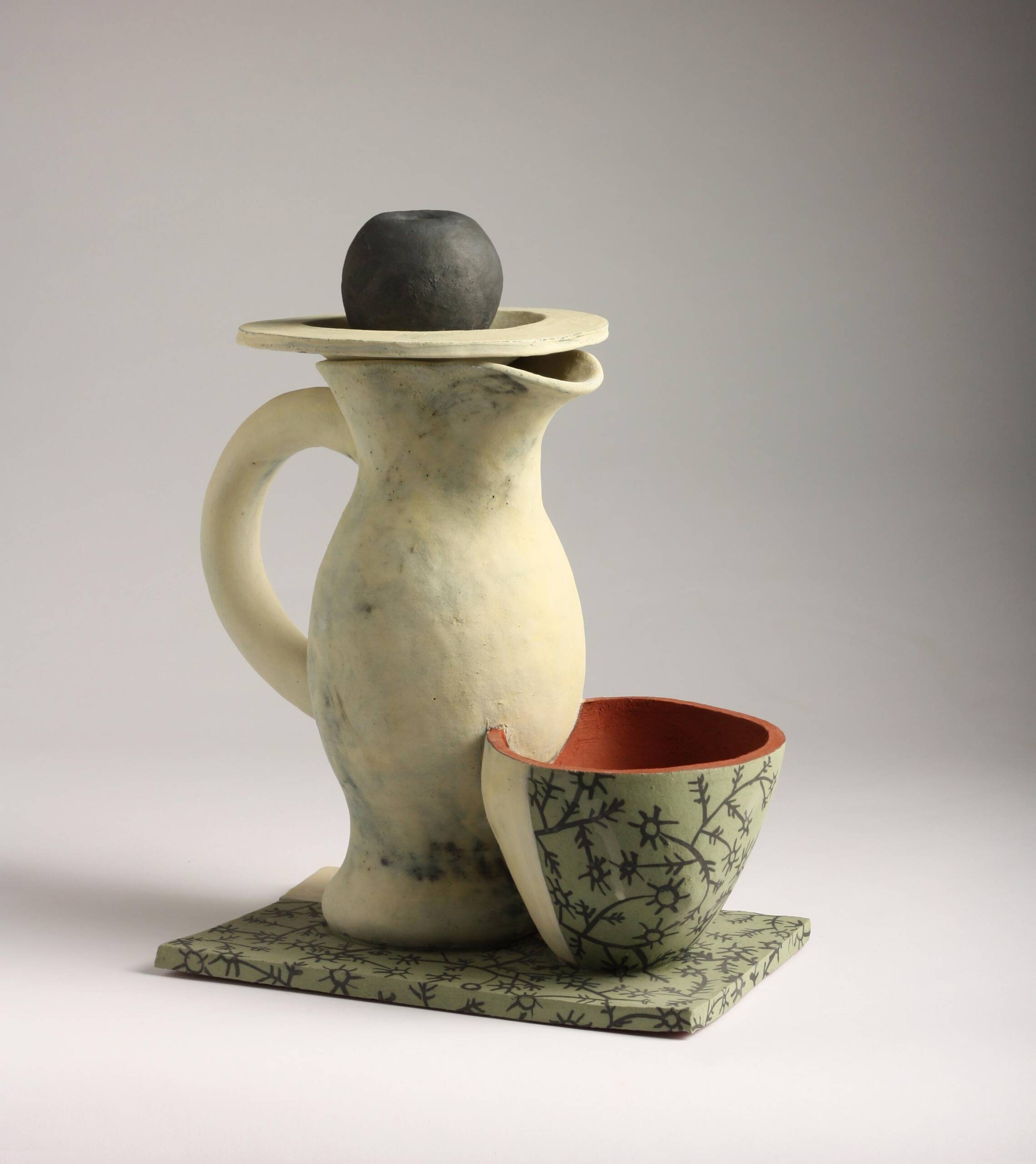
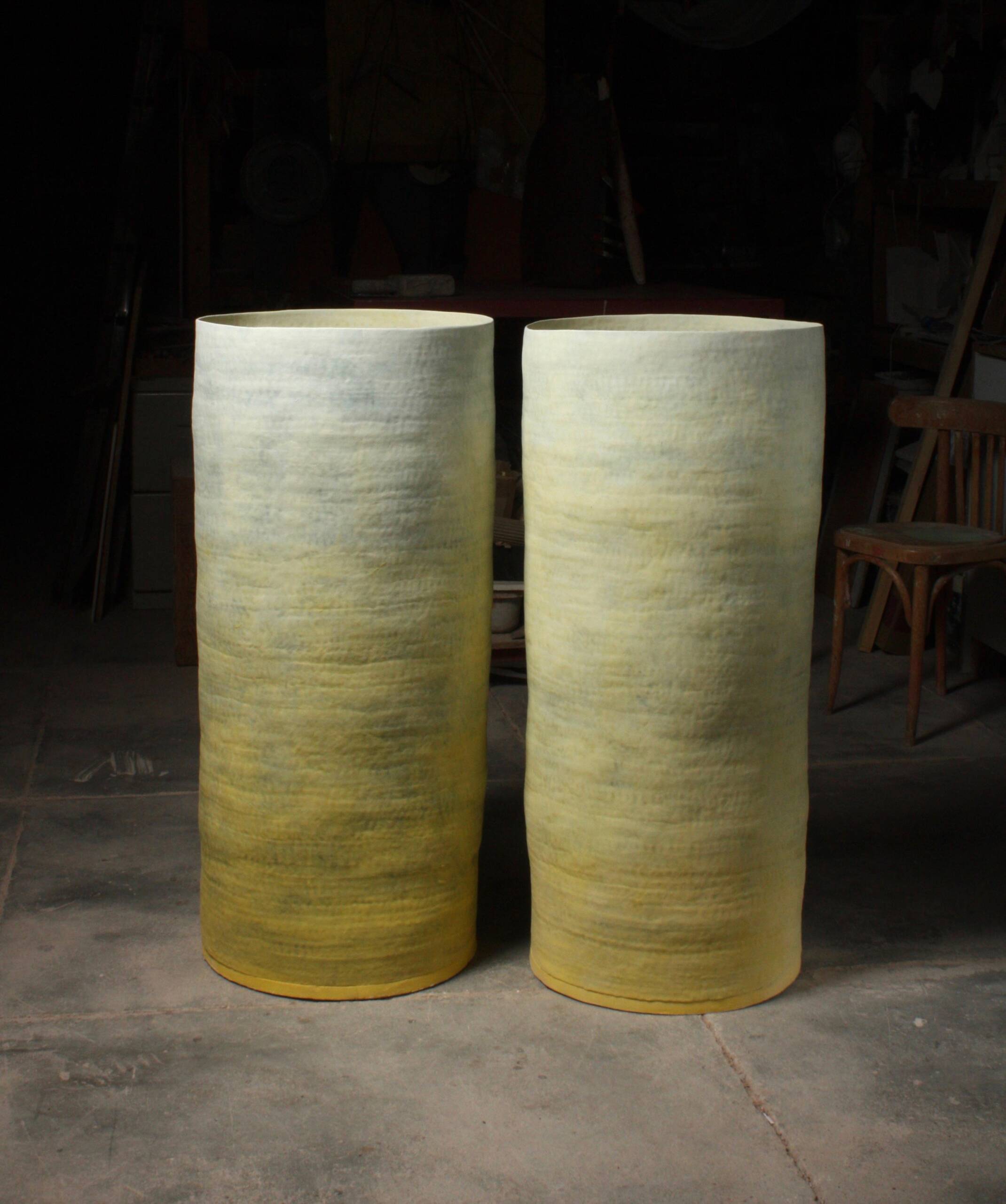
Daphne Corregan Daphne Corregan was born in Pittsburg, USA, in 1954. She became interested in art at an early age, and at the age of 15 she decided to become an artist. In 1971, the family moved from america to the South of France, where Daphne Corregan has been living ever since. Shestudied at the Ecoles des Beaux arts in Toulon, Marseille and aix-en- Provence, where she worked in the studio of Jean Biagini and where her first acquaintance with raku occurred through a visit by Jim Romberg and Paul Soldner. after finishing her training, raku became her favoured firing technique and is typical of her work. Thanks to a stay in Fuping, China, in 2005, and the limited availability of raw materials, Corregan’s palette was enlarged to include the use of stoneware clay, the colour white, and the peony motif as a decorative element in her work. Daphne Corregan’s ceramic art is not comparable to any other and has its special character thanks to the artist’s remarkable sensitivity to the balance of harmony and tension. Without having a rigid thematic concept, Daphne Corregan makes use of her experience in the study of form, decor, colour, glaze and firing technique and of her study of traditional and contemporary art, as well as of the impressions that she has collected on her numerous journeys on the various continents. This happens with the natural lightness of touch of the highly talented artist. Daphne Corregan is an outstanding artistic personality with the ability to create new visual forms between reality and utopian dream. Her works are vessels in the widest sense and are free of any connection to their original functional purpose, they are bodies and organic outer shells, they are figures and architecture. They are containers and dwelling places for ideas, thoughts, experiences, things that have been seen or experienced and are at the point of starting a dialogue, and that communicate with each other, questioning the viewer’s imagination. Daphne Corregan is a painter and draughtswoman as well as being a sculptor. Her forms originate on paper, and it is these drawings that determine the technique and the procedure in how her work is made. The artist usually handbuilds and assembles her work from slabs, or uses coiling for specific parts if the marks made in the making correspond to her visualisation. With knives and nails, she scores the surface of the still soft clay. after the smoking that follows the firing, these marks turn a deep black, emphasising the drawing. The clay is transformed into a rough or smooth skin by the addition of scratches, spots, wounds, linear hatching, semiotic or floral motifs and perforated patterns. Daphne Corregan uses the surface of the clay like drawing paper, and documents the passage of time with archaic signs and symbols, documenting in metaphors maniestations of human existence in diary-like visual noteof world events and what she has experienced or remembered. Daphne Corregan spends a lot of time painting every single one of her vessels, paying particular attention to outlining her drawing, using colour flatly, sometimes overlaying it with obvious brushmarks. In doing this, she often works in collage style, applying areas of colour with slips or glazes adjacent to patterns or visual narrative elements. large areas remain uncovered and are then coloured in the smoke, ranging in shade from a silvery metallic sheen to a deep black. areas of colour, drawing and patterns blend with the form to become a whole. In her work, Corregan is mainly concerned with portraying an object and not so much with the object itself. By playfully liberating simple objects from their everyday context and distorting or exaggerating their forms as well as combining vessel forms with animal or humanoid ones, she also gives them a meaning as sculptural works. One of her aims in this is to create a dialogue and to establish links by confrontation, both within the object and with the viewer. It is no coincidence that expressions like “communicating” and “conversation” occur regularly in the titles of her works. In her earlier pieces, the flattened “pitchers” and “vases”, the two sides are different in the way they are presented graphically and as regards meaning, and they communicate with each other via various aspects or possibilities of the theme being illustrated or of life in general. We repeatedly find drawings of vessels on these vessels, with the link between them being the similar form, for instance, or the similar spout or handle, which merge sculpturally or graphically, and with their outer forms being reminiscent of various living creatures. They discuss the theme of the vessel as body and the body as vessel. In her latest pieces, Corregan often works with forms of the human body, reflected in titles such as “Crânes”, “Two Bellies” or “Tête à tête”. She sets them up opposite each other as duplicates, creating a link between them and making them communicate with each other. In contrast to her often humorous and extroverted earlier work, which sought contact with the public in humorous fashion, her latest work is calmer and more restrained seeming mainly to be engaged in a dialogue with each other in order to set our imagination and out thoughts in motion and to start our dialogue with the artwork.
Hanspeter Dähler Februar 2011
Works in public collections
- Musée des Arts Décoratifs, Paris / Centre Georges Pompidou, Paris
- F.R.A.C. Languedoc Roussillon
- Landesmuseum Stuttgart
- Musée d’art contemporain de Dunkerque
- Musée de Soissons
- Musée Bernard Palissy Saint Avit
- F.N.A.C., Paris
- Fonds Cantonal des Arts Décoratifs et Visuels, Genève
- Musée National de Céramiques de Sèvres
- Musée de la Céramique de Marseille
- Museum fur moderne Keramik, Lotte Reimers, Deidesheim
- F.R.A.C. Basse Normandie
- Maison de la Terre, Dieulefit
- World Ceramic Exhibition Foundation Icheon, Südkorea
- La Piscine, Roubaix
- Olympic Ceramic Sculpture Museum, Amaroussion, Griechenland
- French Ceramic Art Museum, Fuping, China
- Musée Ariana, Genève