


Don’t say much. On silence
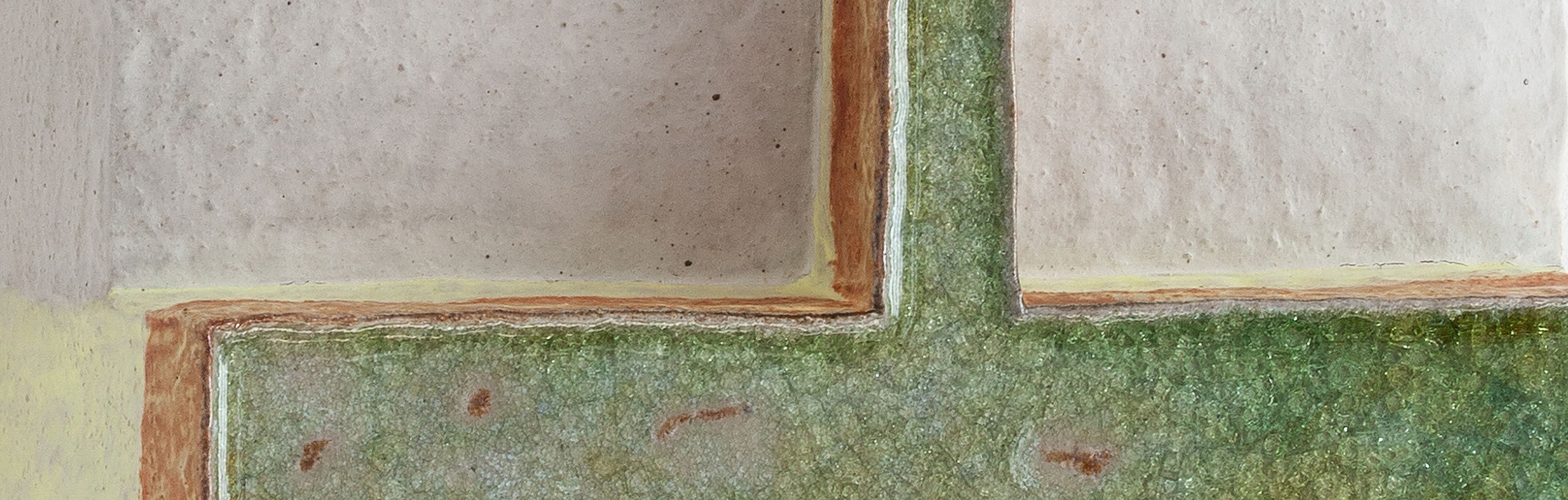
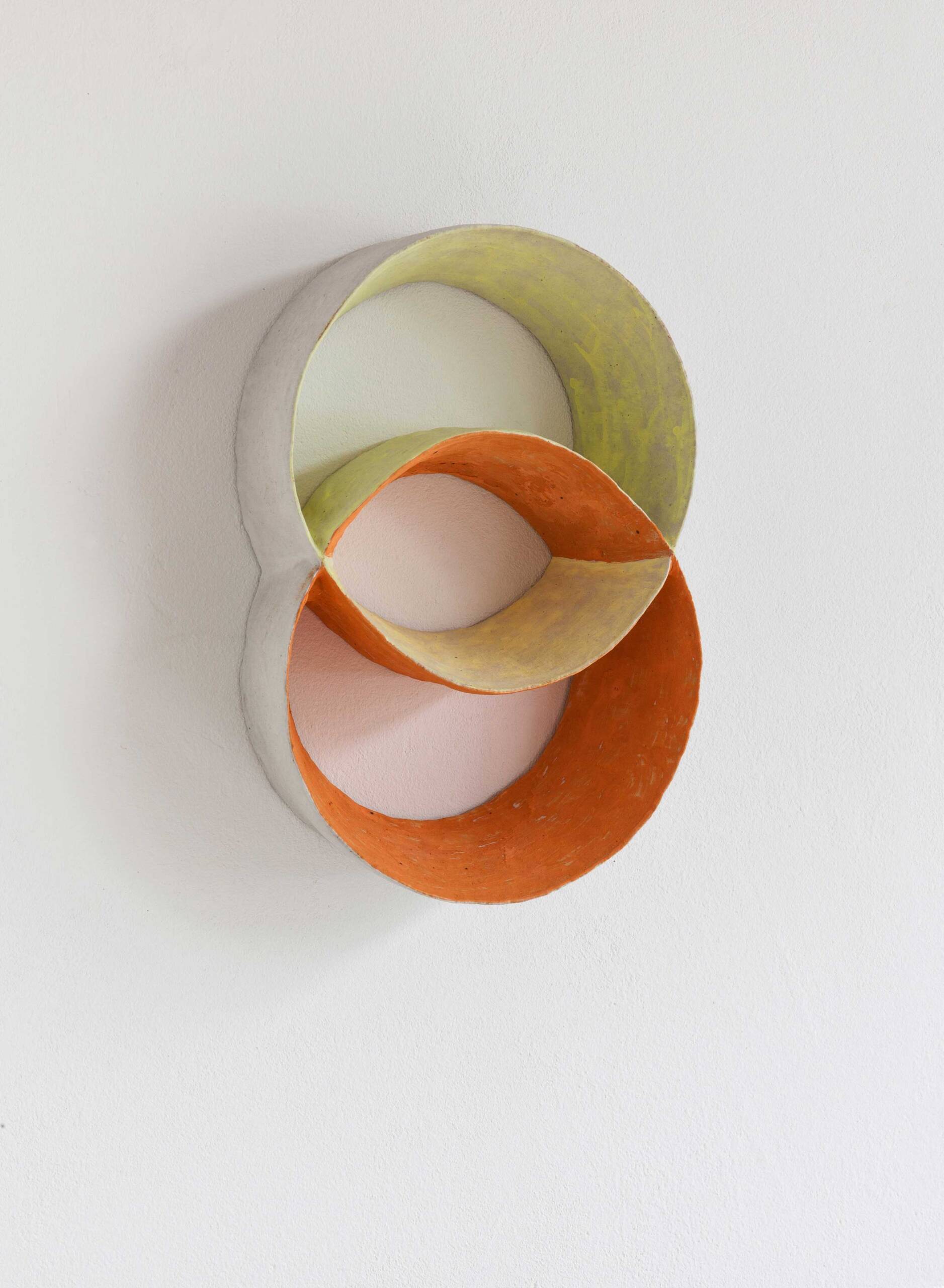
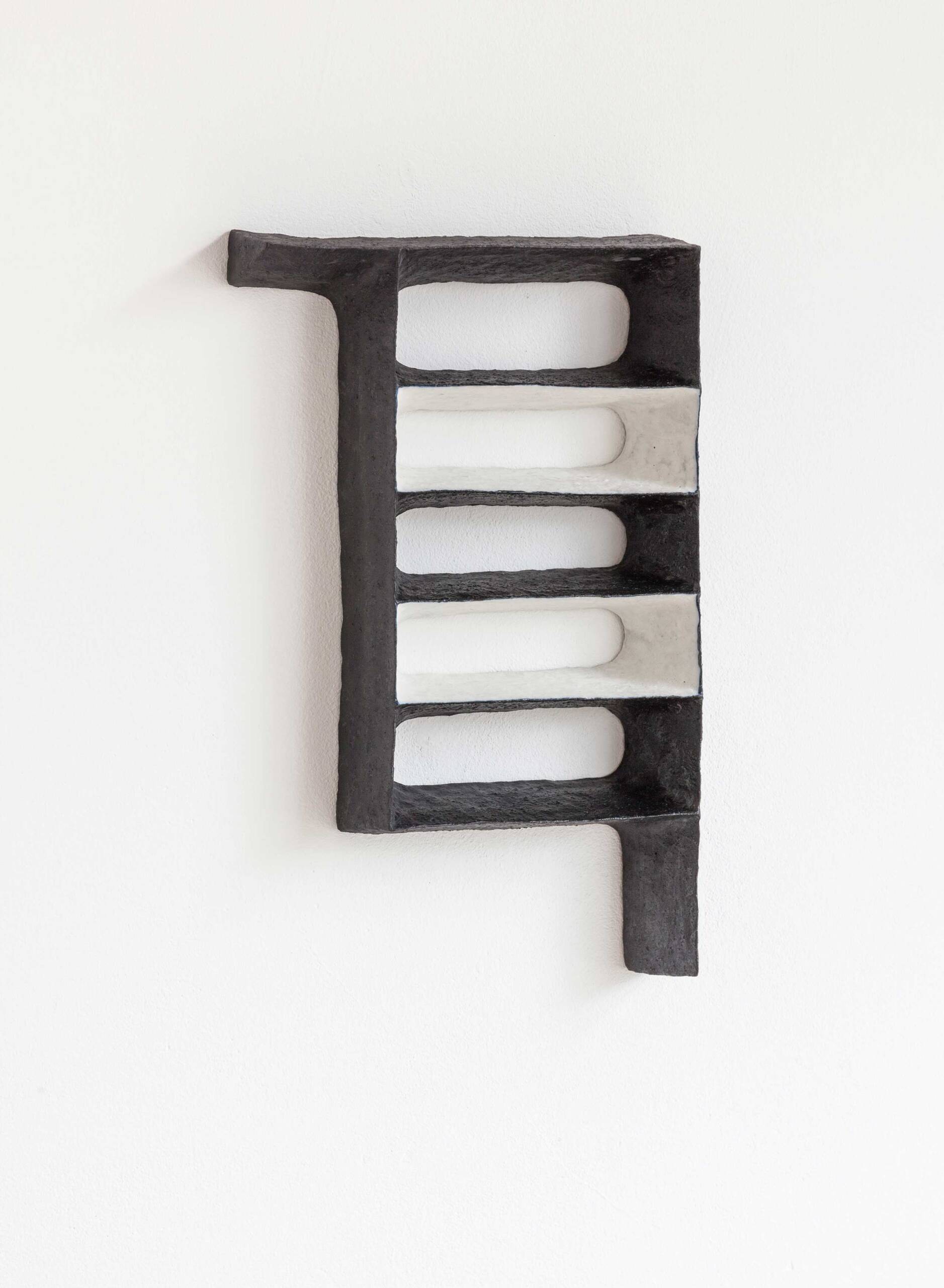
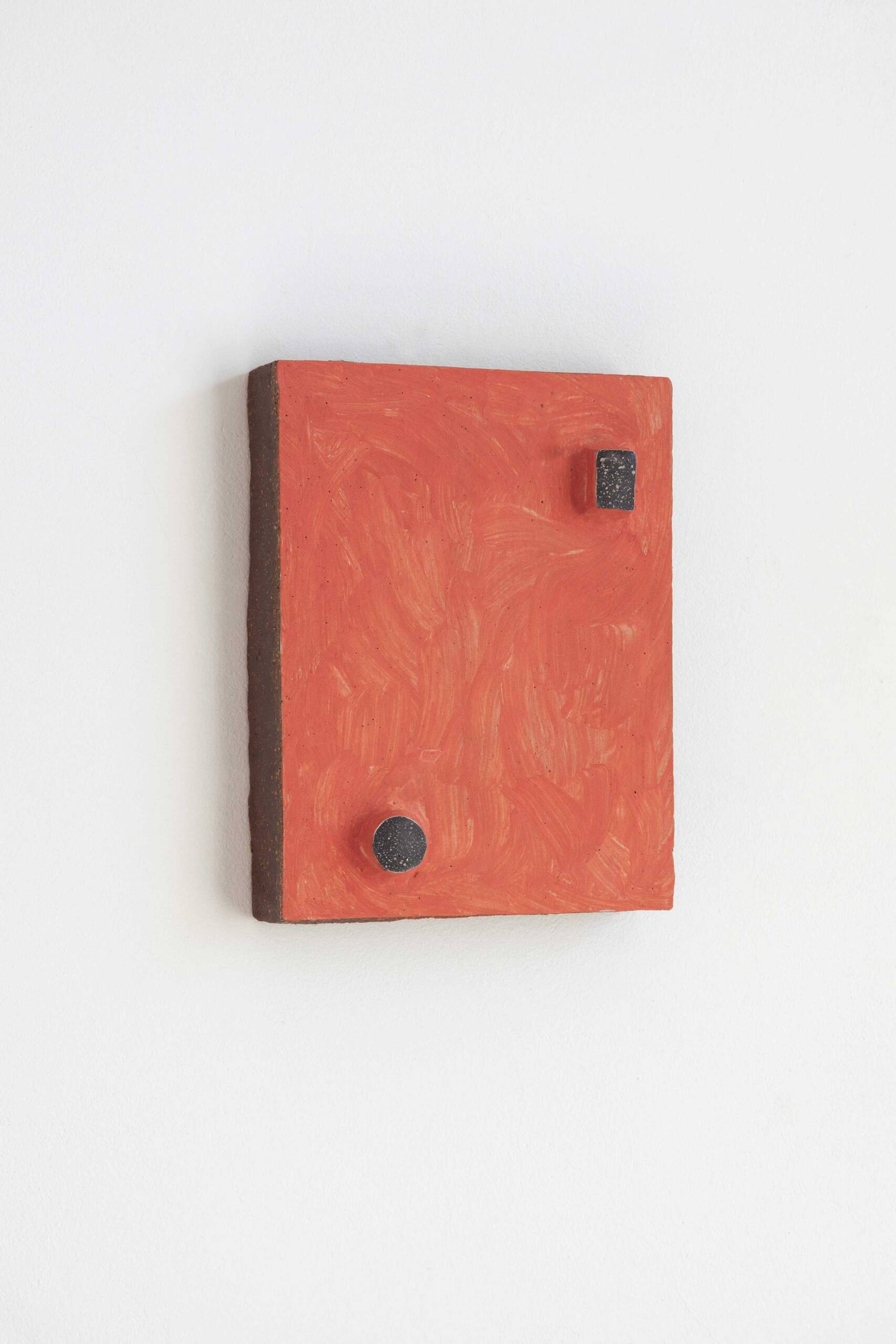
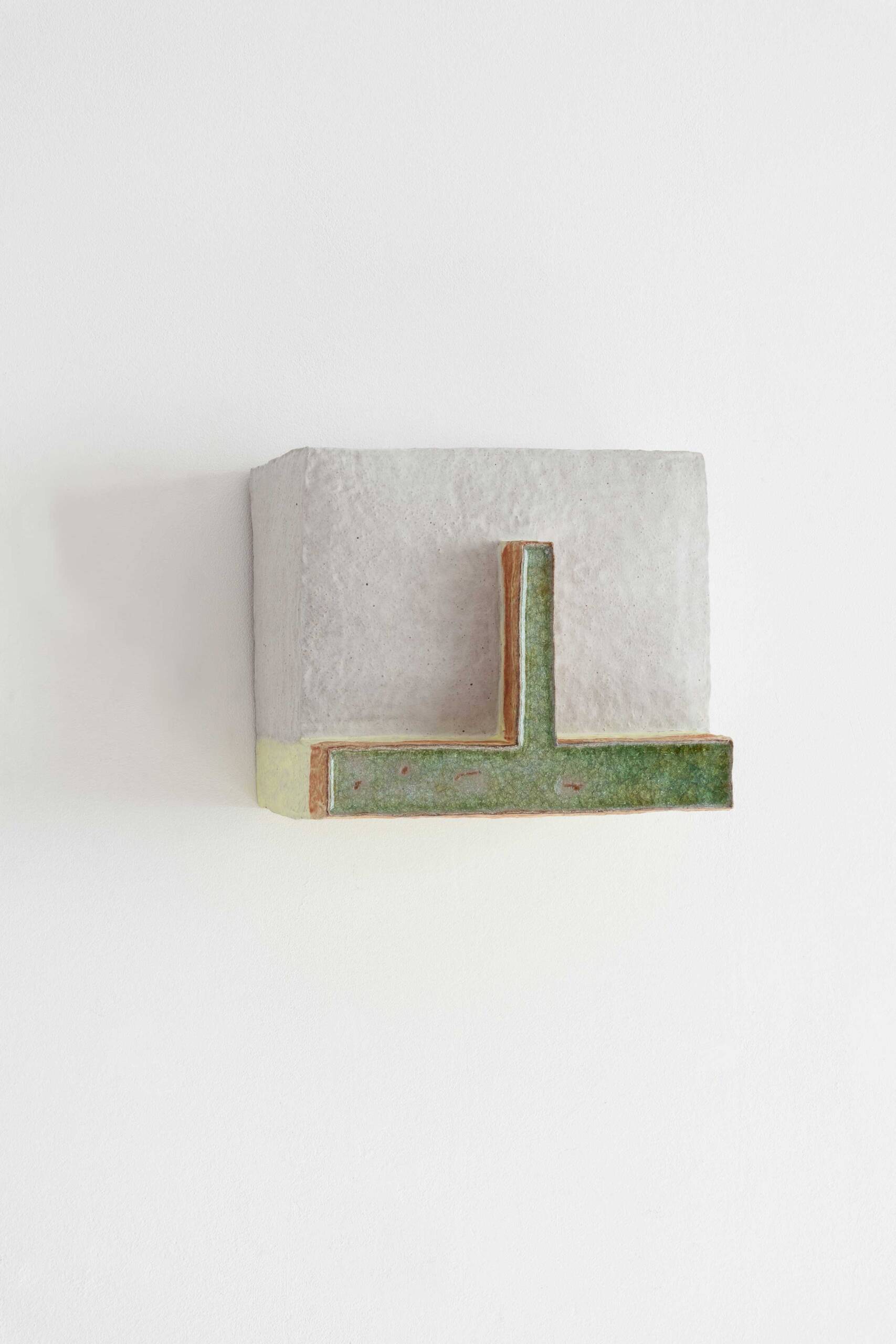
What am I supposed to say – when everything is so still? How can I be expected to use many words – when faced with a system so totally dominated by calm? How am I supposed to analyse something in detail whose entire existence is based on its monolithic coherence? For many years Michael Cleff’s sculptures have impressed with their concentrated power, a power drawn from their simplicity, from their compactness and from the stringency with which Cleff pursues and powers forward his intention, continuously studying his concept, drawing new conclusions and gaining new insights. Cleff works with just a few formal elements, thoughtfully varying them and placing them in new relationships with each other. His minimalist concept is based on fundamental recurring geometric forms – the circle, the square, the rectangle, the ellipse – and on a reduced, monochromatic use of colour. It is as though he has made a conscious decision to use certain notes or a certain number of syllables, combining them in different ways to compose new snatches of tune or to construct new lines of a poem. And when we have the opportunity to view several of Cleff’s work at one time, we become aware that it has its own meditative harmony – the quiet harmony of a man striving to understand phenomena by repeatedly declining anew those things which he observes. His use of geometrical shapes or multi-storeyed rotunda most readily suggests parallels with architecture. Not only because the clay forms he constructs have been fired as hard as clinker; much more than this, it is the subjects he draws on, the relationship between the basic ground plan and the total volume, the way vertical and horizontal interact; it is the way the various elements composing the surfaces create their own rhythms, the way in which the internal and external interlock, the subjects the sculptor chooses, and the features that coincide with classical architectural tasks. One of the most outstanding characteristics of these small, edifice-like sculptures is without doubt the monumental aura they have. Stretching upwards beyond their base and broadening out, their uppermost surfaces arching ceiling-like, the forms take on an even greater dynamic and inner tension. They appear to be enormous, free-standing blocks of dwellings, water towers or halls, places where large numbers of people can gather, where people can maybe share a common silence or listen to music; we have the impression they are reserved for a cultural, indeed even ritualistic, purpose; they are futurist and archaic at one and the same time. The tall facades contain a few, small openings, precise indentations, thrown into dark relief against the white walls. Cleff emphasises this design element, at the same time reinforcing the mysterious appeal of the space inside, a space which we cannot really penetrate, by allowing the light to be absorbed at the very threshold to the structure. The window-like openings are positioned right at the top of the sculptures, thus increasing their monumental feel and underlining their contemplative character. We immediately contrast ourselves with the steep walls, and as we do so we curiously have the impression of being so very tiny compared with the tower-like structures and containers that broaden out at the top and which we start to round off in our minds, and which above all else emanate one thing: total silence. There is something very surreal about the tall, white structures; they stun us, just like the dazzling, empty townscapes created by the Italian painter Giorgio de Chirico. What strikes one about Cleff’s pedestal and wall work is that he always operates with the principle of duality. We always find two elements representing contrasting systems, two elements which he juxtaposes – or aligns – in his pieces: rounded and angular forms, vertical and horizontal elements, lines and spaces, light and dark, black and white, rough and smooth, matt and shiny, and in most cases he works with two parts of a space which he interconnects. Initially, this approach took the form of two hollow elements split in two, thus creating the effect of two storeys or of a single-storey building with another storey built on top. Here, however, Cleff is exhibiting a series entitled »On Addition«, and links the two elements together horizontally, thus creating the impression of an extension. Usually we can clearly discern the main form as the starting point for the ‘extension’: it is significantly taller and contains window-like openings typical of Cleff’s style. Then again, an angular box is added on to a circular form, but with a swelling, organic excrescence protruding from the side of a rectangular spatial construct, a rectangular form built on to a semicircle. In addition to these features, the spatial structure of the added parts is far less calm and much more animated than the smoothed walls of the main structure. Cleff treats his pieces with pigments and slips which becomes part of the ceramic during the firing process. He thus obtains a matt, strongly contrasting colour tonality and emphasises the surface structure and its gently resonating textures. The horizontal surfaces delimiting the volume like a flat canopy occasionally have a silky smoothness, which Cleff achieves by polishing the material after firing. This creates an even stronger impulse on the part of the viewer to touch the pieces and to investigate their tactile qualities with the fingertips. Just like the structured slip surfaces, the polished elements reveal something that had remained concealed to the eye –the rhythm and motion of the creating hand; the structure and colour of the material used. If sometimes two different colours can be seen, it is an effect created by the underlying structure of the base material and the applied surface both being visible. Just as a rectangle is never exactly 90°, so the walls Cleff creates are also never exactly straight: just as the surfaces gently pulsate, the rising, closing lines meander gently, inclining inwards and then slightly buckling outwards again, yet never to such an extent that they lose their inherent tension. The sculptor’s freely creating hand decides intuitively on the balance between objectivity based on precision and the necessary degree of subjective creative freedom. And so, in a quite unexpected way, the volume elements which first appeared to be hermetically sealed allow insights, revealing information about themselves and communicating with the observer, and gradually a silent, perhaps initially surprising dialogue develops about the determination of spaces, about the relationship between spatial constructs and inner volumes, and about our primordial needs and desires in these matters. Cleff’s language is spartan, yet never cold. The forms he uses are strict, yet never dogmatic. What interests him is the reduction of phenomena to enable satisfying perception, of one’s own voice, one’s own reactions, and ultimately of one’s own self. What he creates is the discovery, the plan and the accessibility of our own inner rooms. In the midst of a raging torrent of information and events, he constructs and opens up rooms for us, where we can withdraw into our imagination; refuges for our thoughts, oases of quietness, and places where we can encounter our own quest and experience.
Gabi Dewald Lorsch, July 2004
Biografie
- 1961 Born in Bochum
- 1990/96 Bildhauerstudium, Kunstakademie Düsseldorf, Meisterschüler bei Prof. Fritz Schwegler I lebt und arbeitet in Bochum und Mülheim / Ruhr
Einzelausstellungen (Auswahl)
- 2024 Am Rechteck, Galerie Kunstforum Solothurn, Solothurn
- 2023 Built, Galerie Geissler Bentler, Bonn
- 2021 Intervention II – Michael Cleff, kunstraum friesenstrasse, Hannover
- 2020 Vibrant Systems, Stiftung KERAMION, Frechen
- 2019 Der Wand entlang zum Beckenrand, Michael Cleff und André Schweers, Galerie Bernd Bentler, Bonn
- 2019 Michael Cleff – Mischung, Kunstforum Solothurn
- 2018 Michael Cleff – Liquids, Centre céramique contemporaine, La Borne I An den Rändern, Gesellschaft der Freunde junger Kunst, Baden-Baden
- 2017 An den Rändern, Kunstmuseum Ahlen
- 2016 Impromptu, Galerie Idelmann, Gelsenkirchen I Exempla – Kleine Bauten, Messe München
- 2015 zwei und zwei, D. Kaiser und M. Cleff, Kunstforum Solothurn und Galerie Christoph Abbühl
- 2014 Shifting, Carlernst Kürten Stiftung, Unna I Über fast rechte Winkel, Landesmuseum Oldenburg
- 2012 Sculptures Céramiques, Galerie Hélène Porée, Paris
- 2010 Michael Cleff, Galerie Terra Delft
- 2007 Michael Cleff, Galerie Pierre, Paris
- 2006 Friedemann Grieshaber + Michael Cleff, Galerie im Artforum, Ortenau
- 2005 Begegnungen – Michael Cleff und Edmund de Waal, Galerie Marianne Heller, Heidelberg I Art Karlsruhe
- 2005, (Galerie b 15) I Michael Cleff – Plastische Arbeiten, Galerie Januar e.V., Bochum
- 2004 Zwischen den Dingen, Stadtmuseum Hattingen I Galerie Puls, Brüssel
- 2003 Garth Clark Gallery, Long Island City, NY I Galerie Mouvements Modernes, Paris
- 2002 Galerie b15, MünchenI Michael Cleff – Wilfried Gehring, Lauenburgischer Kunstverein, Büchen
- 2001 Galerie Kossdorf, Wien
- 2000 Recente Keramische Objecten, Kunsthuis Loosveldt, Oostende I Galerie Ortillés-Fourcat, Paris
- 1999 Michael Cleff +Gabriele Hain – Skulptur, Städtische Galerie Freihausgasse, Villach
- 1998 Garth Clark Gallery, New York
Gruppenausstellungen (Auswahl)
- 2018 Artisten, Galerie Januar, Bochum I Bochumerkünstler 2018, Kunstmuseum Bochum I Gefäss/Skulptur 3, Grassi Museum, Leipzig
- 2017 Weiss – 30 Jahre Galerie, Kunstforum Solothurn, Galerie Christoph Abbühl, Solothurn I SKULPTUREN, Q1, Bochum
- 2016 sechs, Galerie Christine Hölz, Düsseldorf
- 2015 Bochumerkünstler 2015, Kunstmuseum Bochum I Contemporary Ceramics, Galerie Officine Saffi, Milano
- 2014 European Ceramic Context 2014, Bornholm Art Museum I Formed, Djanogly Art Gallery, Lakeside Arts Centre, University Park, Nottingham
- 2013 Fotografie und neue Medien, Kunstmuseum Mülheim
- 2012 Shifting Paradigms in Contemporary Ceramics, Museum of Fine Arts, Houston
- 2011 L’Appel de L’Abstrait, Galerie du Don, Le Fel
- 2010 SpielRaum, Stadtmuseum Hattingen
- 2009 Bochumer Künstler 2009, Kunstmuseum Bochum
- 2007 4th World Ceramic Biennale Korea 2007, Icheon I Modern Ceramics from Central Europe, Museum of Modern Ceramic Art, Gifu (Japan)
- 2004 SOFA New York, Museum Zauli I fire/ice – minimalism in Ceramics, WDO, Charlotte/NC (USA)
- 2003 The Art Show – In Praise of Holes: From Fontana to Voulkos, Garth Clark Gallery, New York
- 2002 Blue + White = Radical, Garth Clark Gallery, New York I 2 culturas, un dialogo, Wanderausstellung in Lugo, Cordoba, Zaragoza – Museo Nacional de Ceramica, Valencia
- 2001 Und keiner hinkt, Museum Kurhaus Kleve und Kunsthalle Düsseldorf
- 2000 100 Jahre Deutsche Keramik – Wanderausstellung in Arita, Hagi, Seto, Shigaraki, Sapporo – National Museum of Modern Art, Tokyo I Craft from Scratch, 8. Triennale für Form und Inhalt, Frankfurt, Sidney, Adelaide
- 1997 50° Premio Faenza, Concorso Internazionale della Ceramica d’Arte, Museo Internazionale delle Ceramiche, Faenza
- 1994 Zur Darstellung weitverbreiteter Seen, Klasse Schwegler, Hochschule der Bildenden Künste Dresden
Auszeichnungen (Auswahl)
- 2004 1st European Ceramic Contest, Bronze Prize, Athen
- 2002 The 6st International Ceramic Competition, Special Judge’s Award, Mino (Japan) I 18. Biennale Internationale de Céramique d’Art de Vallauris
- 1999 Staatspreis des Landes Nordrhein-Westfalen
- 1997 50th Premio Faenza, Concorso Internazionale della Ceramica d’Arte I Die keramische Fläche, 1. Preis, Nassauische Sparkasse
- 1990 Richard Bampi Preis, 2. Preis
Werke in öffentlichen Sammlungen
- American Craft Museum, New York
- Long Beach Museum, Long Beach, California
- Mint Museum of Art and Design, Charlotte, North Carolina
- Newark Museum, New Jersey
- Racine Art Museum, Racine, Wisconsin
- The Museum of Fine Arts, Houston, Texas
- Charles A. Wustum Museum of Fine Arts, Racine, Wisconsin
- Museum of Modern Ceramic Art, Mino (Japan)
- World Ceramic Center, Icheon City (Korea)
- Musée Nationale de Céramique, Sèvres
- Musée Magnelli, Vallauris
- Museo Internazionale delle Ceramiche, Faenza
- Musée Ariana, Genf
- Badisches Landesmuseum, Karlsruhe
- Grassimuseum, Leipzig
- Museum Angewandte Kunst, Frankfurt
- Keramikmuseum Berlin
- Keramikmuseum Westerwald, Höhr-Grenzhausen
- Keramion, Museum für Zeitgenössische Keramik, Frechen
- Kunstmuseum Ahlen/Westfalen
- Kunstgewerbemuseum Schloß Pillnitz, Dresden
- Kunstsammlungen Veste Coburg, Coburg
- Kunsthalle Mannheim
- Städtische Museen Stadt Landshut
- Württembergisches Landesmuseum, Stuttgart