
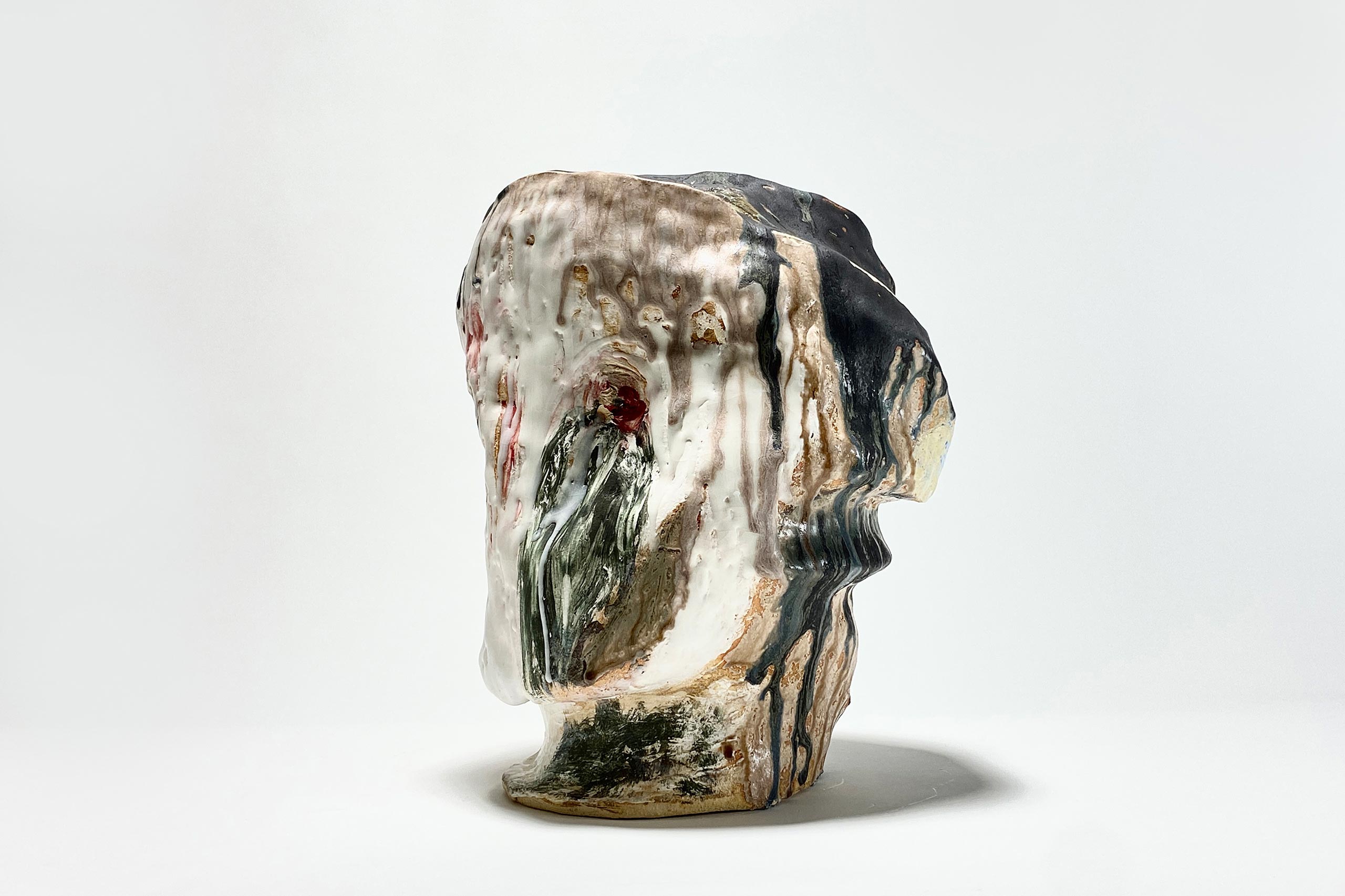
The body of the soul
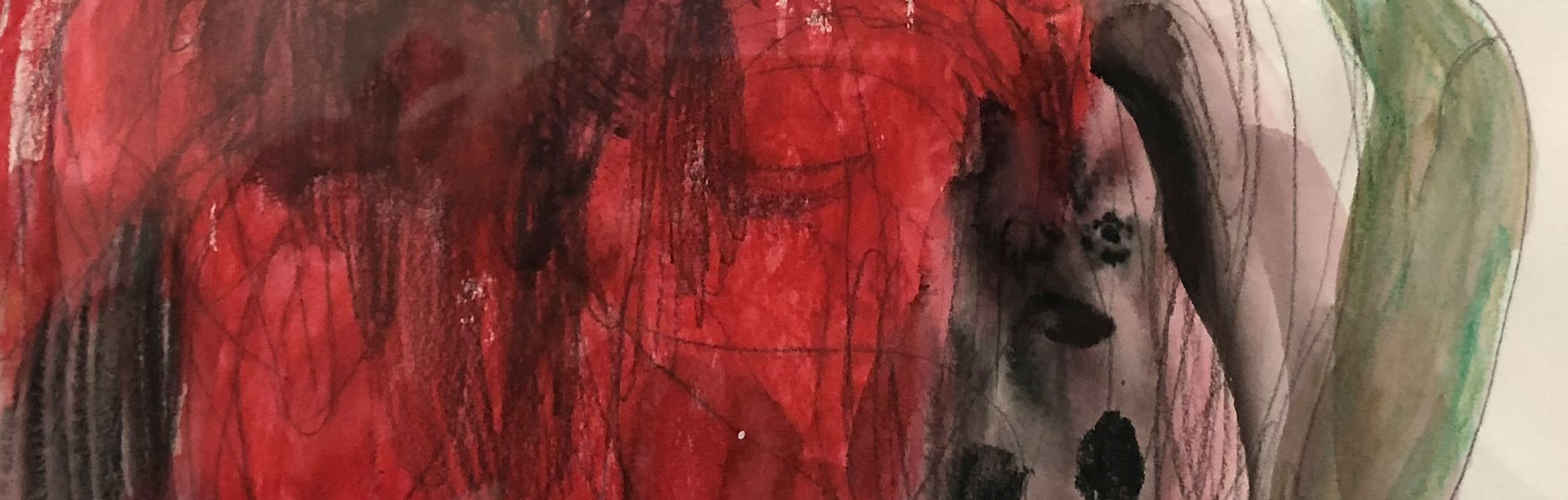
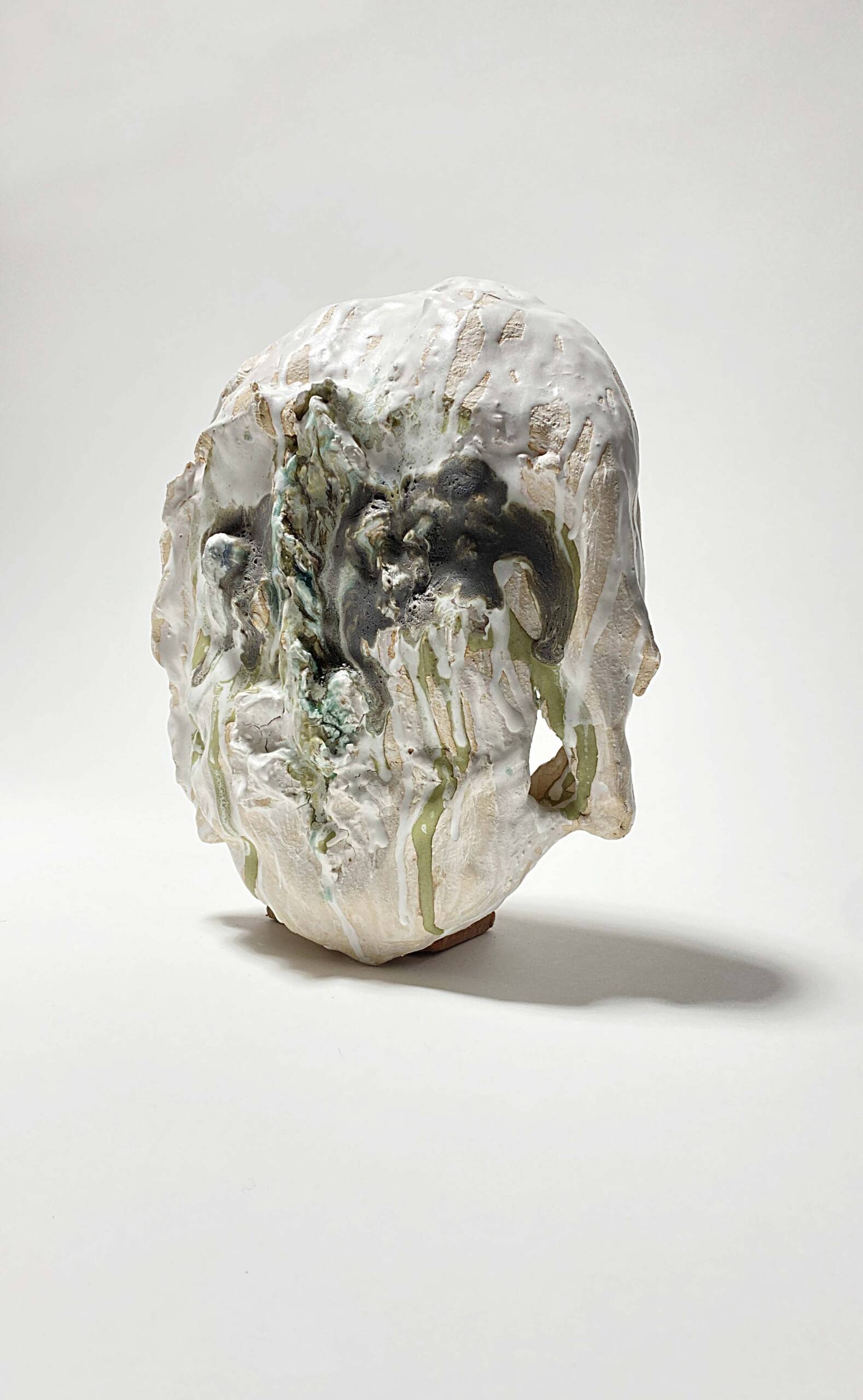
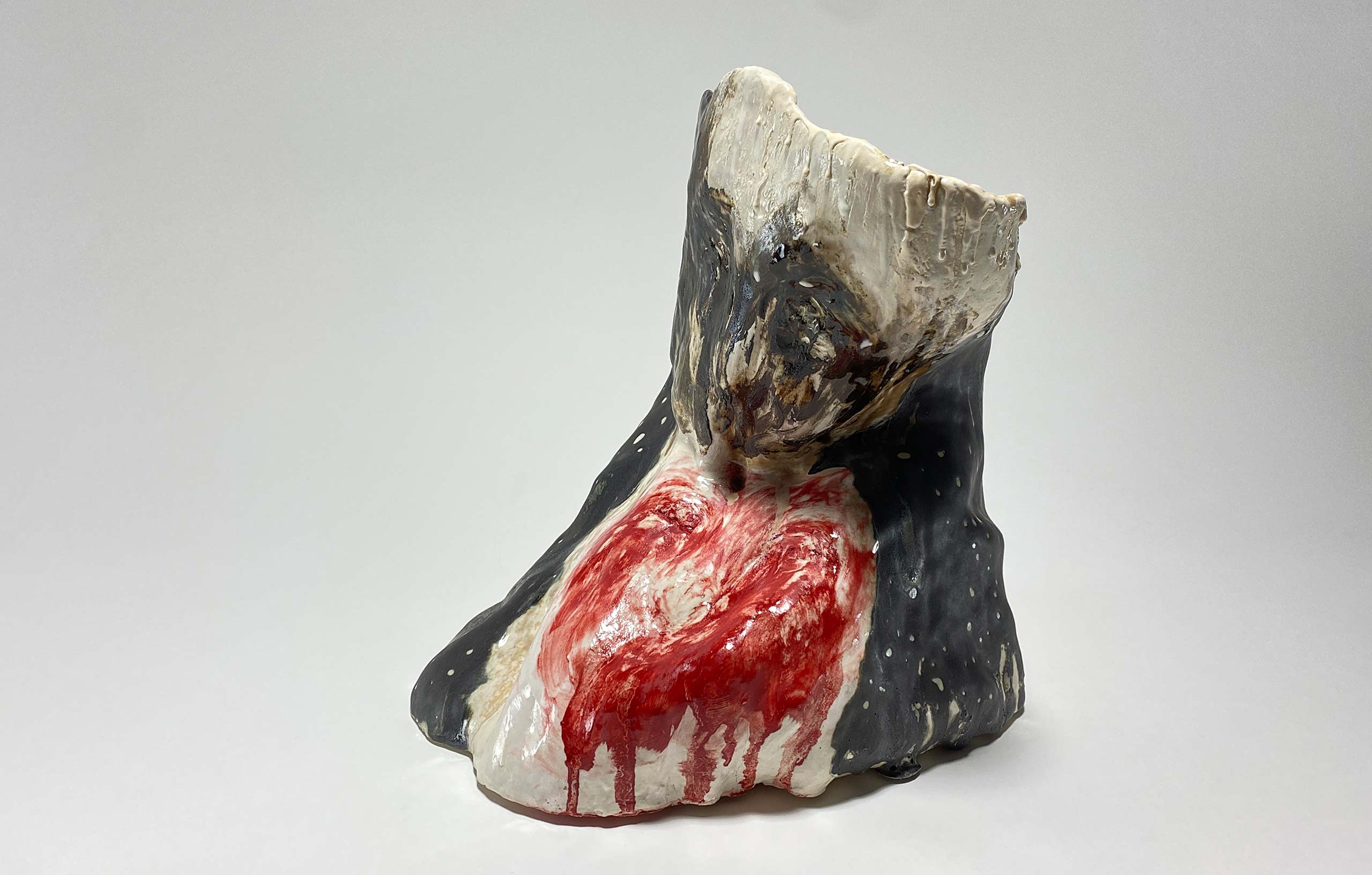
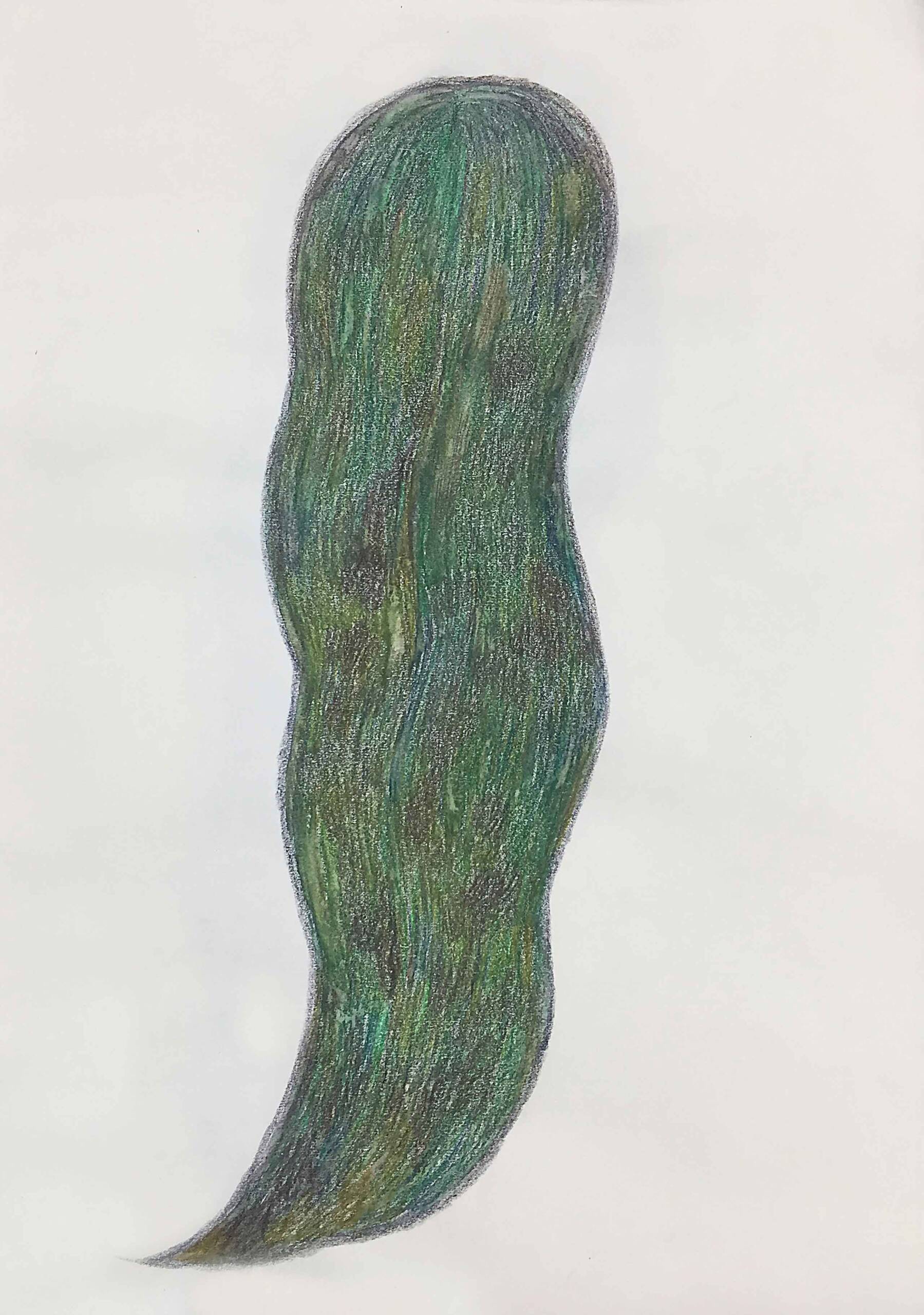
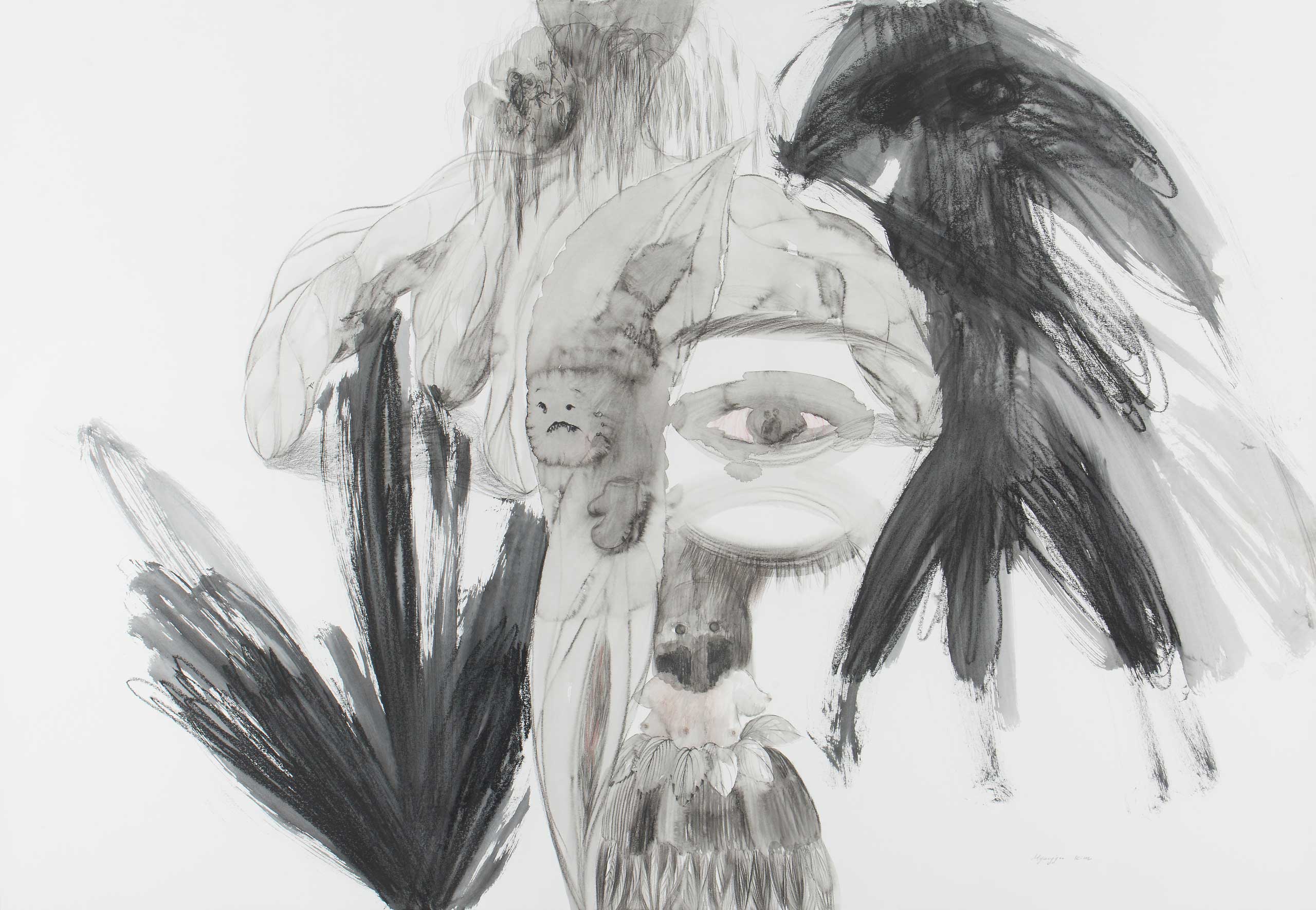
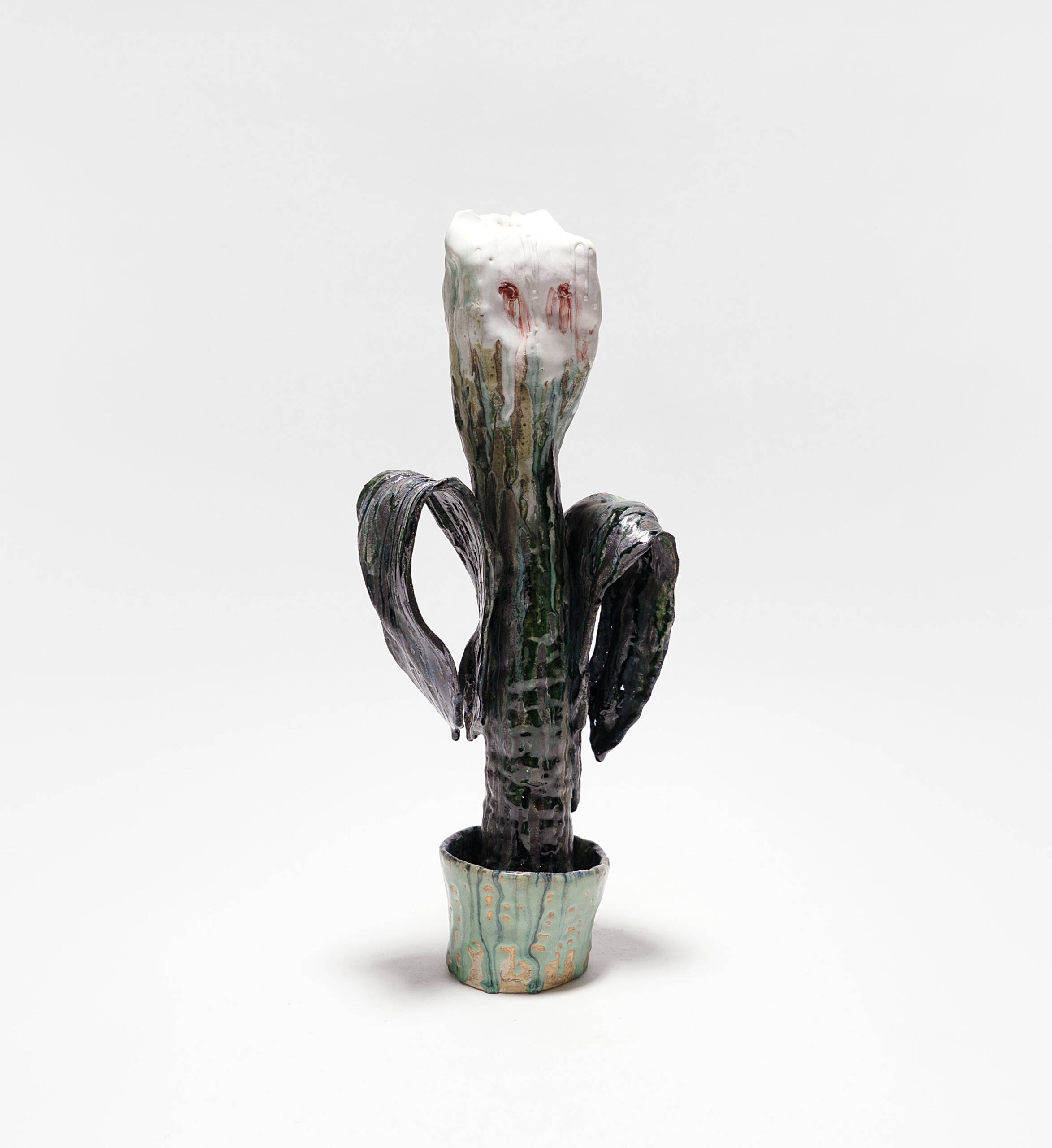
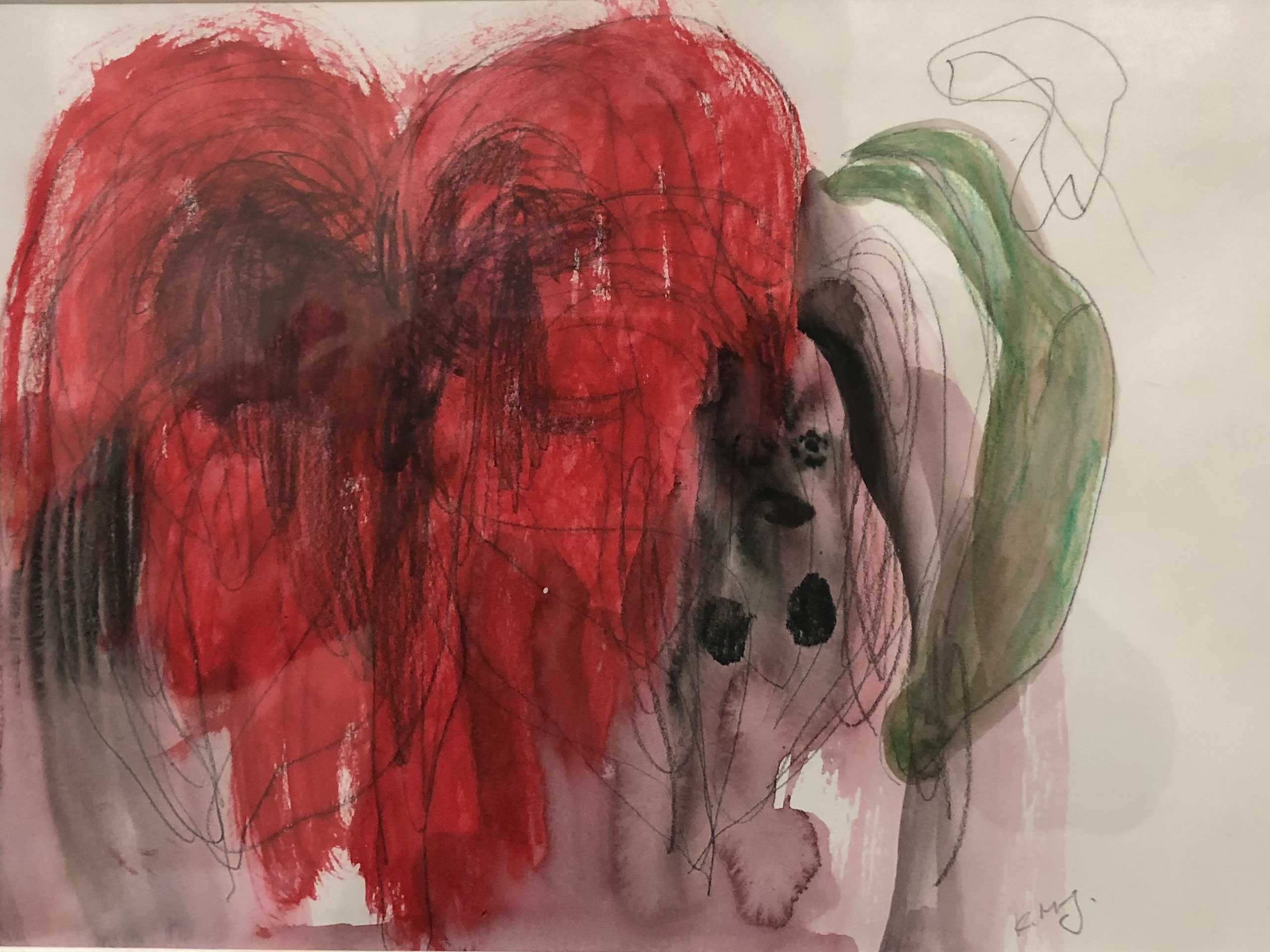
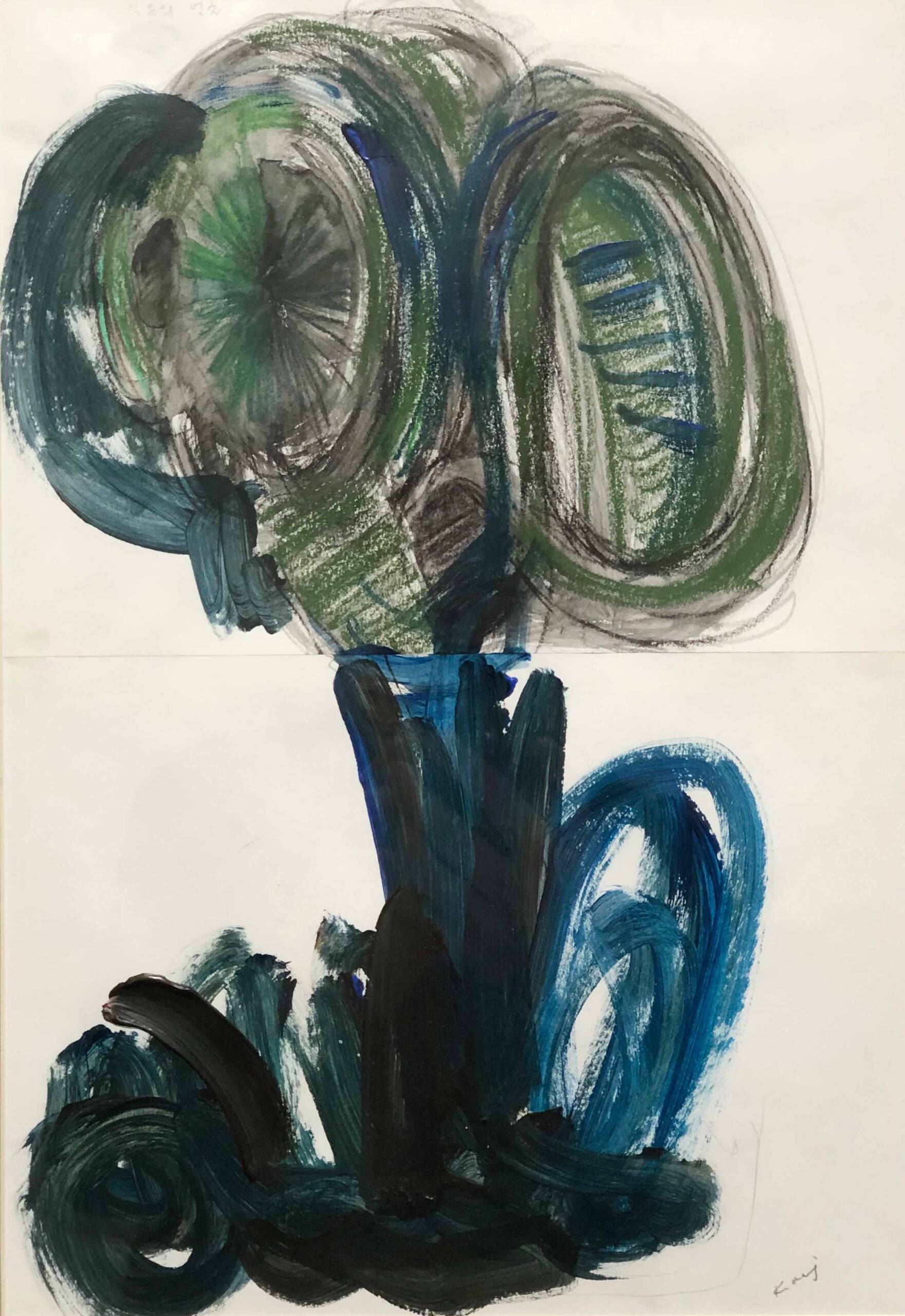
Sculptural forms made of stoneware and porcelain dissolve, faces disappear, enamel colours fuse to a glowing rain; Myung-Joo Kim’s (ceramic) universe defies the rational and invites us instead to drift away into the unfamiliar, into the mystery of being. By modelling the clay sensitively with her fingers and the palms of her hands, she captures that which is beyond our grasp, the human soul and its pain. In this, however, she constantly strives after truth by developing her own methods and allowing the compound and glaze to merge, both controlled and uncontrolled. We can all sense that there is a soul, but we cannot grasp what it is. How can one fathom something that is not actually perceptible, reveal something that is indescribable? Even though painting and sculpture has made repeated attempts, a preoccupation with the soul has rather been the domain of musicians and poets. Their art manages without outlines, without anything that can be identified or recognized, just like time. Moving much as in a dream, Myung-Joo Kim dares to venture forth into this field. To that which is formless she gives a material and often even baroque form, she captures the inner movement, the excitement that motivates us, the animal that lives within us, and nature, too, becomes perceptible when her trees begin to resemble human bodies. The soul, the animistic, and the animalistic can all be thought together in Asian cultures. The soul belongs to what is transcendent and mysterious. It is not the ceramicist’s objective to paint or give shape to this inconceivable, mystical, and elusive something, but only to create a sense of its existence. Myung-Joo lends it a physical form for us to be able to see and feel it in its permanently interdependent relationship with the body. Mere suggestions of human figures emerge from the clay, and the colourful glaze blends on a vibrant white ground, vaguely reminiscent of moods, blood, tears… in any case, one can sense them. There is a nonpresence about these organic figures, which seem to have passed through pain and suffering, but without having lost their humanity. Even though the eyes almost disappear in the whorls of these small misshapen objects, one nevertheless gains the impression of something that is looking. A transformation begins to take place. A curve, a tilt are reminiscent of a back, a shoulder. At times it seems one can recognize numerous small heads in the glaze, heads which nevertheless remain elusive. The artist also creates small, fragile figures that wander about alone. As with Louise Bourgeois, who has depicted equally tortured bodies, no psychoanalysis takes place here either. Myung-Joo consciously distances herself from any expression of feelings. The portrayal of despair, fear, grief, abandonment, and loneliness lends these figures a great purity of intention. In the depiction of a head that is about to approach another head, to gently merge with it, lies profoundest humanity; one in which love, even in the failure of being, never wholly fades away. Myung-Joo Kim was born in Korea in 1973. At the age of eighteen she begins to study ceramic sculpture at the Hong-ik University in Seoul. In addition to studying traditional techniques, she is encouraged to seek her own form of expression. To support herself she creates computer-based images, but for her own artwork she prefers to work with pencils. It is easier for her to go from a drawn to a three-dimensional form and it is closer to that which she feels, to her restlessness and her feelings. To this day, her sculptures are developed from drawings. In 2001, for personal reasons, she moves to Paris, where she spends several years creating poetical figures. With their animal bodies, human heads, and plantlike hair, these form an unusual synthesis of European culture and Asian animism. The time in Paris is an important stage on the way to a dream universe, in which she develops her own ideas. In 2018, after a residency grant in Shigaraki, Japan, she begins to study towards a Master of Arts degree at the École nationale supérieure des Arts visuels in Brussels. During this time, she develops her artistic expression further to finally become a truly great artist, one who has mastered her medium and methods to perfection and allows herself to be inspired by her own dreams. In 2013, she is honoured with the Prix Ariana (awarded by the Musée de l’Ariana) at the Parcours Céramique Carougeois and the museum subsequently acquires one of her sculptures. The artist once again lives and works in Korea, where she continues to refine her work. Without a doubt, Myung-Joo Kim’s universe occupies a unique place in contemporary ceramics.
Carole Andréani
Biography
- Born at Daejeon, South Korea, work in Paris and Daejeon
- Membre de la Maisons des Artists en France
- Membre de l’I.A.C (International Academy of Ceramics), Genève, Switzerland
Educations
- M.F.A in Arts plastiques, visuels et de l’espace, Ceramic (Grande distintion),
- École Nationale Supérieure des Arts Visuels de La Cambre, Brussels, Belgium
- B.F.A in Ceramics, College of Fine Arts, Hong-ik University, Seoul, Korea
Awards, Bourses
- 2021, Fund for korean art abroad 2021–2022, Korea Arts Management Service (KAMS), Korea
- 2014, First Prize (Jury Award), Ceramic 14, Ceramic Salon of Contemporary Art, Paris, France
- 2014, laureate «Les Coups de Coeur des Amis de la Cambre» Brussels, Belgium
- 2013, Prix ARIANA, ARIANA Museum, Geneva, Switzerland
- 2009, Public Award, Ceramic 14, Ceramic Salon of Contemporary Art, Paris, France
- 2009, Silver Quentin, TERRALHA Contest of European Ceramic Festival, St-Quentin la Poterie, France
Public collections
- National Museum of Modern and Contemporary Art, Artbank (국립현대미술관 미술은행)
- ARIANA Museum, Geneva, Switzerland
- Beijing Guozhong Ceramic Art Museum, China
- Museum of contemporary Ceramic Art, Shigaraki, Japan
- Arctic Ceramic Centre, Posio, Finland
- Ecole Nationale Supérieure des Arts Visuels de la Cambre, Belgium
Solo exhibitions
- 2024 «Transitions» Kunstforum Solothurn, Switzerland
- 2024 «Au bord de l’infini» P21, Seoul, Korea
- 2023 «Subito p – Immersion» The One Piece of Art, ARTBN, Seoul, Korea
- 2023 «La nuit transfigurée» Hori Artspace, Seoul, Korea
- 2022 «Miroir de joie» Salle basse de la Crypte Rostropovitch, Beauvais, France
- 2022 «EOLGUL-Visages» Vazieux Art Gallery, Paris, France
- 2022 «Terre de l’Âme» Kunstforum Solothurn, Solothurn, Switzerland
- 2019 «Playing Blind» Art Lounge, Temi Artist Residency, Daejeon, Korea
- 2019 «Yesterday Kafka» Window Gallery Meme, Seoul, Korea
- 2018 «FLOWING» Gallery Meme, Seoul, Korea
- 2017 «Secret Faces» Ceramic lookie, ClayArch Gimhae Museum Cubic house, Korea
- 2013, C’Bos, 13th Carougeois Ceramic Trail, Carouge, Switzerland
- 2011, Talents Opéra, Ateliers d’Art de France, Paris, France
- 2010 «Thinking or Dancing» Circuits Céramiques (A.I.C), Territoires en movement, Galerie Ph.Gelot, Paris
- 2008 «Hushigino morino sasayaki» Galerie Maronié Kyoto, Japan
- 2008 «La Forêt et les étrangers» Galerie Ph.Gelot, Paris, France
- 2007 «Mes mains murmurent ma terre…» Galerie Ph. Gelot, Paris, France
- 2004 «Peintures sur faïence» Galerie Ph.Gelot, Paris, France
Selected group exhibitions
- 2025 «고독; 문이 닫히고, 또 다른 문이 열릴 때» LEEUNGNO Museum, Daejeon, Korea
- 2025 «Unknown places» Kunstforum Solothurn, Solothurn, Switzerland
- 2025 «Vivant et en devenir» Delta, Namur, Belgium
- 2025 «Eyes Reflecting The World: Works from Mr. Jinyoung Kim Collection» 뉴스프링프로젝트, Seoul, Korea
- 2024 «Liberté conditionelleI», Musée Ariana, Geneva, Switzerland
- 2024 «…und hätte ich der Liebe nicht… II», Kunstforum Solothurn, Solothurn, Switzerland
- 2024 «TRACES AND THREADS», KÖNIG Seoul, Korea
- 2024 «Wonderful!Colorful!»,Centre culturel Ter Dilft, Bornem, Belgium
- 2024 «In Constant Change I», Kunstforum Solothurn, Solothurn, Switzerland
- 2024 «Lucky Bubbles» ARTBN, Seoul, Korea
- 2024 «Happy Horiday», Hori Artspace, Seoul, Korea
- 2023 «Sillon-Itinéraire-Art-Drôme», Le Port cloche, Rochebaudin, France
- 2023 «Gisèle Buthod-Garçon Résonances», Galerie Terra Viva, St-Quentin la Poterie, France
- 2023 «FUNDUS» Kunstforum Solothurn, Solothurn, Switzerland
- 2022–2023 «The Uncanny World», Museum of contemporary Art Busan, Korea
- 2022 «Migrations», Musée Ariana, Génève, Switezerland
- 2021 «C14-Paris Salon de Céramique Contemporaine», Borne, France
- 2021 «Summer group show» Galerie Vazieux, Paris, France
- 2021 «Mouvement – Qualia» PLACEMAK2, Seoul
- 2021 «생명체 Lives » 정서진아트큐브, Incheon Seogu cultural fondation, Incheon
- 2020 «2020 IAC New Member Exhibition» Beijing Guozhong Ceramic Art Museum, Beijing, China
- 2020 «l’Exil» Galerie Vazieux, Paris, France
- 2020 «왼손의 움직임» Seoul Art Space Geumcheon, Seoul, Korea
Artist Residency Programme
- 2022, Résidence Céramique à l’école d’art du Beauvaisis, France
- 2019, TEMI Artist Residency, Daejeon, Korea
- 2015–2016 ClayArch Gimhae Museum, Korea
- 2014, Symposium Artic Clay, Posio, Finland
- 2014, Stage avec l’artist Patrick Loughran, Paris, France
- 2010, A.I.R, Vallauris, France
- 2008, Ceramic Cultural Park, Shigaraki, Japan
Catalogues d’expositions
- «Transfigured Night», Solo Exhibition with HoriArt Space, Seoul, 2023
- «Miroir de joie», Solo Exhibition after Artiste Residency of Ecole d’art du Beauvaisis, France, 2022
- «Playing Blind», Solo Exhibition with TEMI Artist Residency, Daejeon Culture and Arts Foundation, Korea, 2019
- «Secret Faces», Solo Exhibition with ClayArch Gimhae Museum, Korea, 2017
- «Reload», ClayArch Gimhae Museum, Korea, 2017
- «XXIVème Biennale international création contemporaine et céramique Vallauris 2016», France
- «Triennale des amis de la Cambre», ENSAV La Cambre, Belgique, 2016
- «Vivid Dream», ClayArch Gimhae Museum, Korea, 2016
- «Objectif Terre», 18ème Biennale internationale de Céramique de Châteauroux, France, 2015
- «All of Thease Are Made of Clay», 20 Years of the Artist in Residence Program, Edited by The Shigaraki Cultural Park, Japan, 2013
Magazines
- Ceramics Now – April 2022
- Monthly Ceramic Art (Korea) – April 2022
- Monthly Ceramic Art (Korea) – December 2018
- La Revue de la Céramique et du Verre (France) – N° 167, 168, 177, 193, 210, 224
- Atelier d’Art de France (France) – N° 82, 100, 119
- L’Objet d’Art (France) – N° 460