

“To see what everyone can see, but does not see.”
Paul Valéry, Cahiers, 1894–1945
Everything or almost everything is line – The drawings and sculptures of Doris Kaiser
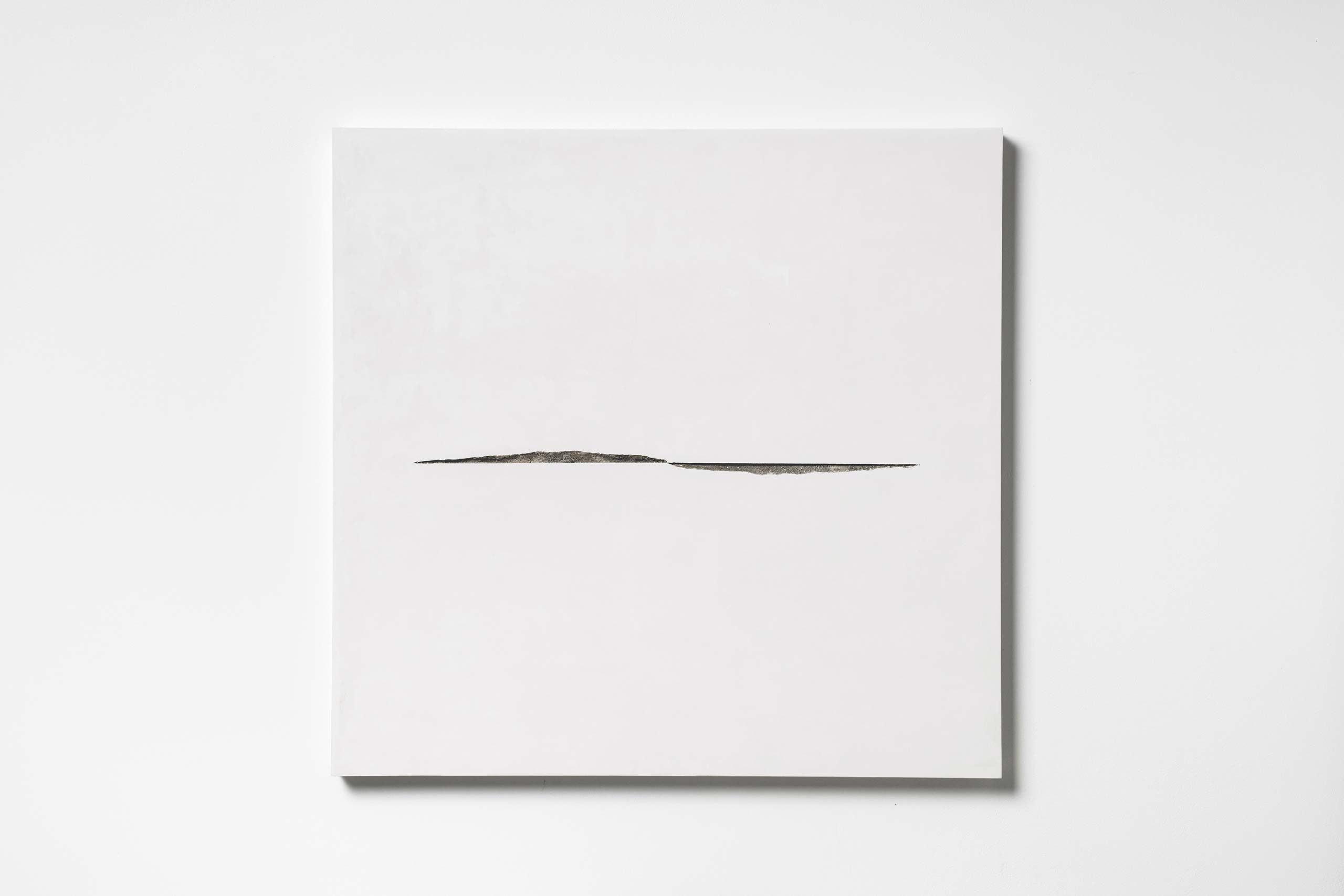
They please the eye; their discreet presence is engaging. In their restrained, illuminate materiality and linear clarity, Doris Kaiser’s works, both the sculptures and the drawings, occupy a transient space in which a sculptural piece can be image, can be architecture, and in which a material white can tend towards emptiness and immateriality – a transitional space in which art, everyday life and nature meet, and in which movement, process and duration blend.
The simplicity and clarity of Doris Kaiser’s work is deceptive. In post-modern times they summon up a whole field of artistic and cultural-historical referen- ces. Yet, in the currently prevailing pluralism of media, the concept that defines what a drawing is has long since left paper’s surface.[1] Relatedly, Doris Kaiser’s paper-based work, which she has been developing since 2006, embodies concepts and conditions that are reflected in her sculptural works.
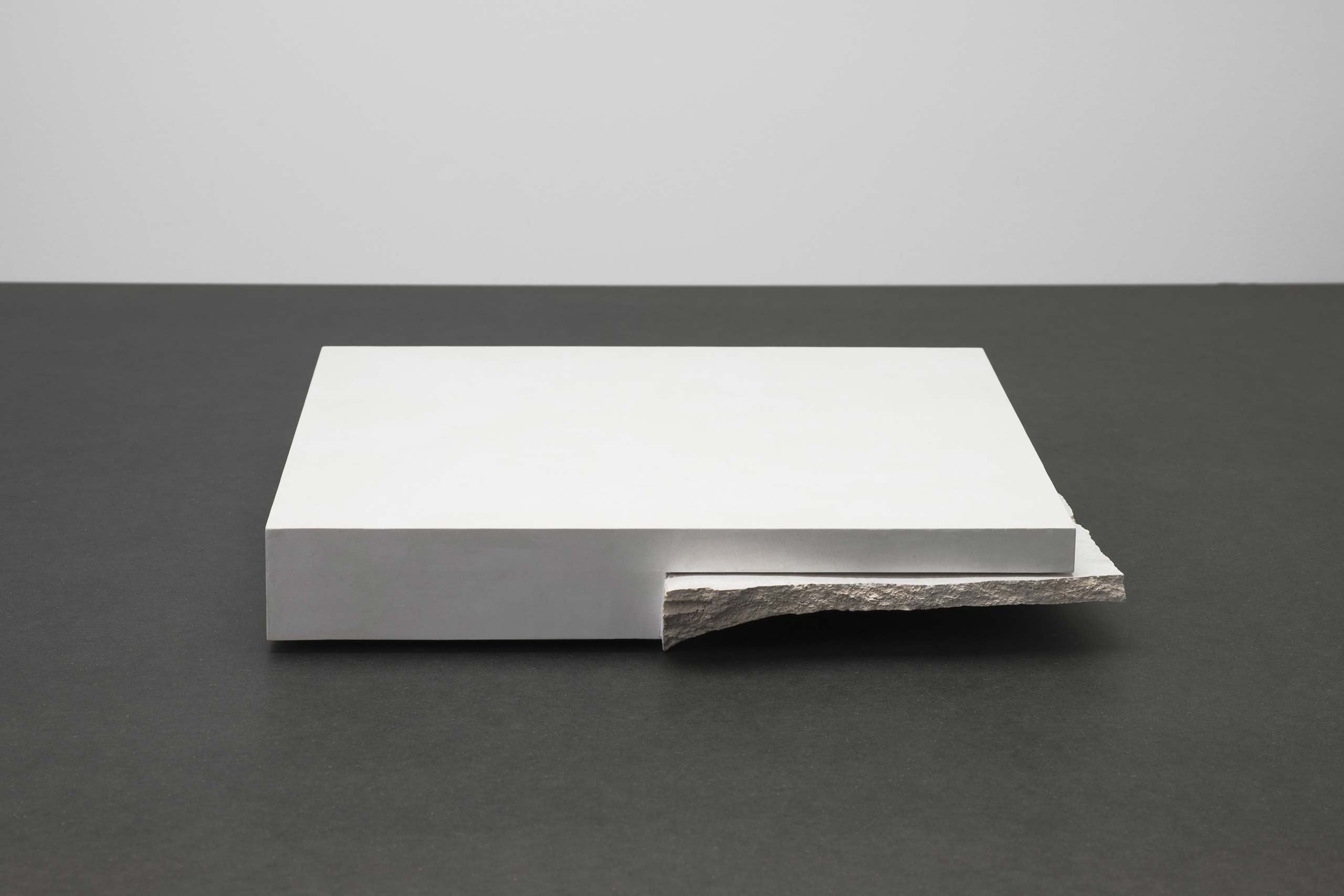
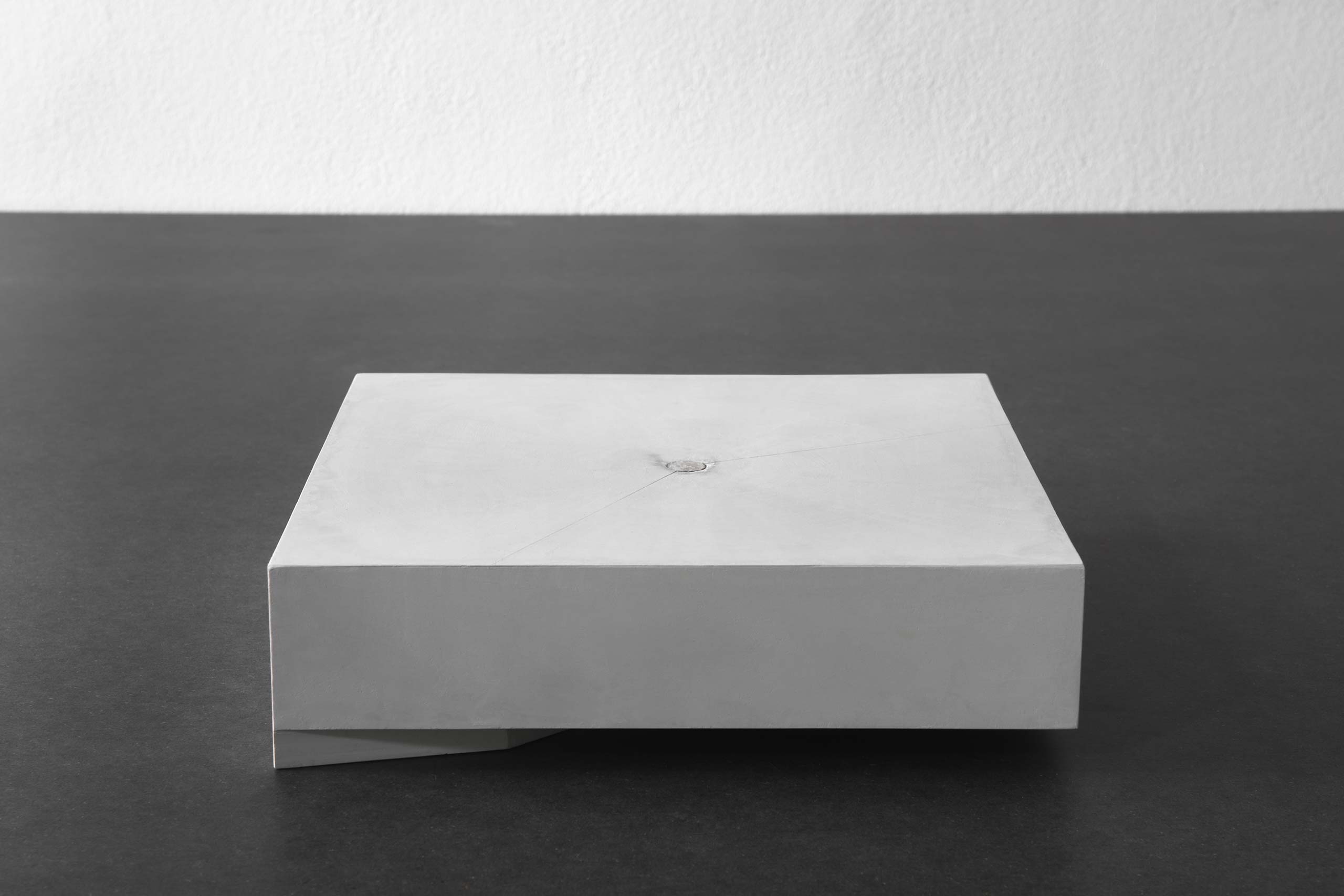
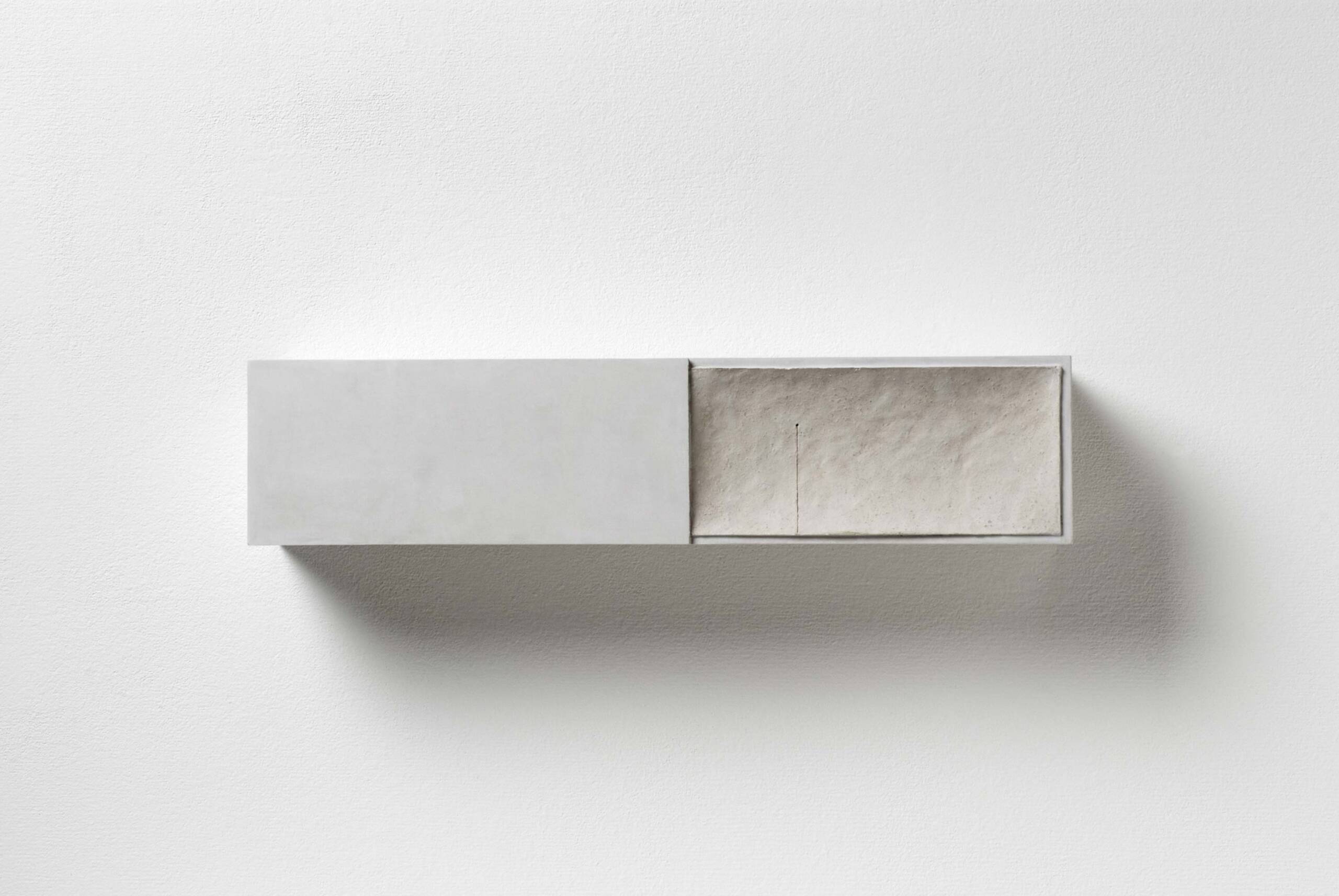
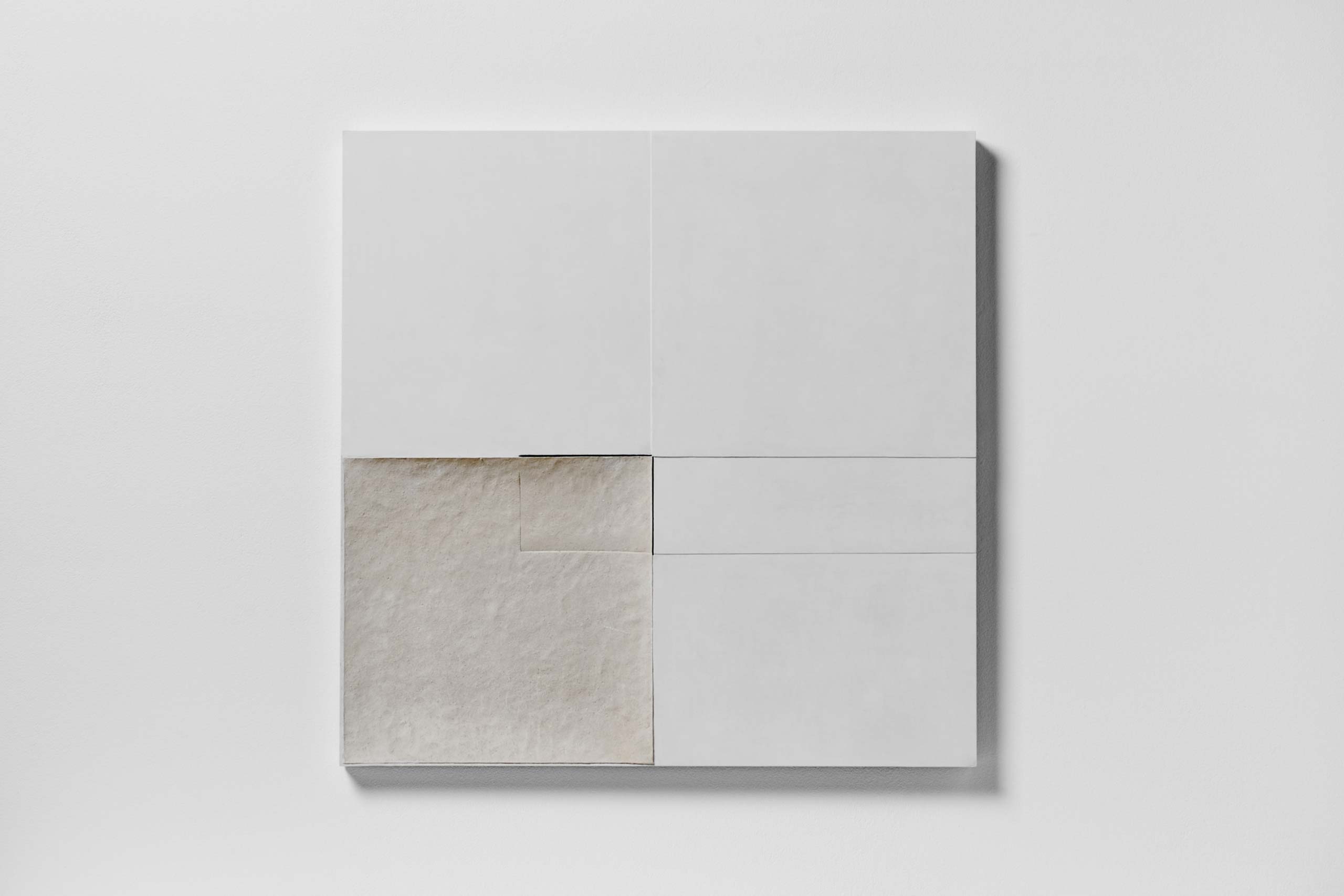
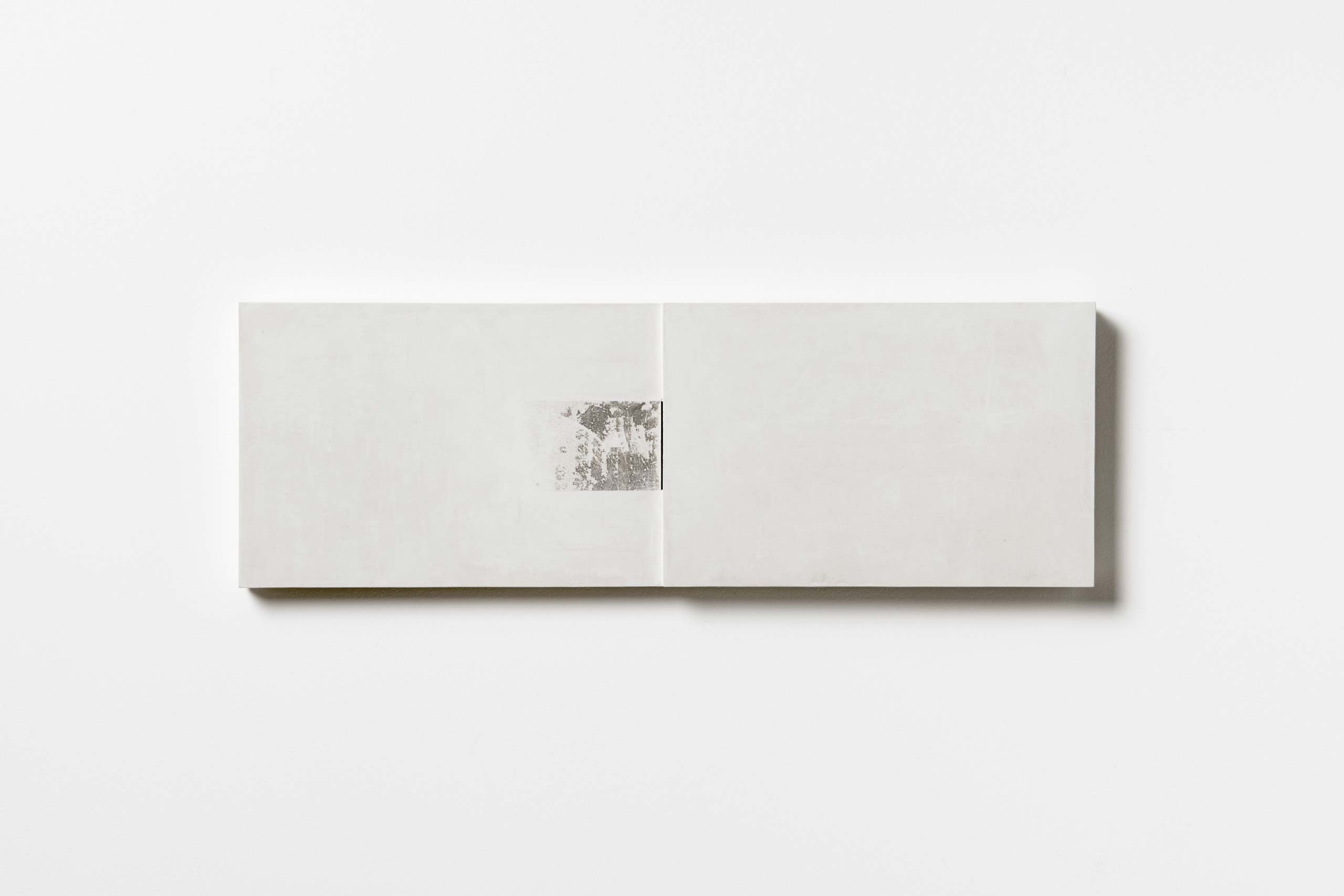
The foregrounding of the colour white is reminiscent of the experimental abstraction of classical modernism, the immateriality claims made by artists like Yves Klein and many other similar endeavours, whatever their motivation, towards nothingness.[2] The smooth and shallow plaster surfaces, at times cracking or curving, and the illusory whiteness of the paper stand in relation to the surrounding space, specifically, the exhibition space, to the white cube or in general to the architectural history of the white wall.[3] In Doris Kaiser’s work the colour white remains integral to the material, the paper, the plaster. It does not outshine the form, nor does it cause the contours to dissolve, remaining an unassuming presence. The concentration on only a few basic materials and their persistent inflection emphasises a substantial, original, and perhaps also an implicit symbolic content, as the earthen clay is considered to be the most primitive creative material of all, associated with life and plasticity. Plaster, on the other hand, is considered to be the polar opposite. The ‘dead’ mineral substance is used for casting and conservation. In the nineteenth century numerous plaster cast collections of antique sculptures provided a generally accepted educational canon, a now mostly forgotten practice.
There is a connection to such classical techniques, as Doris Kaiser takes the character of the material into consideration when she pours plaster, shapes clay with her hands and draws on paper. She works in accordance with the material, while implementing tools that allow the artist to distance herself from the work and create a conceptual interspace. In the sculptural works, the artist works with casings and smooth slabs, which form her basic stock of shape-giving materials. These lend the works their clarity, but also allow for reactions specific to the materials.
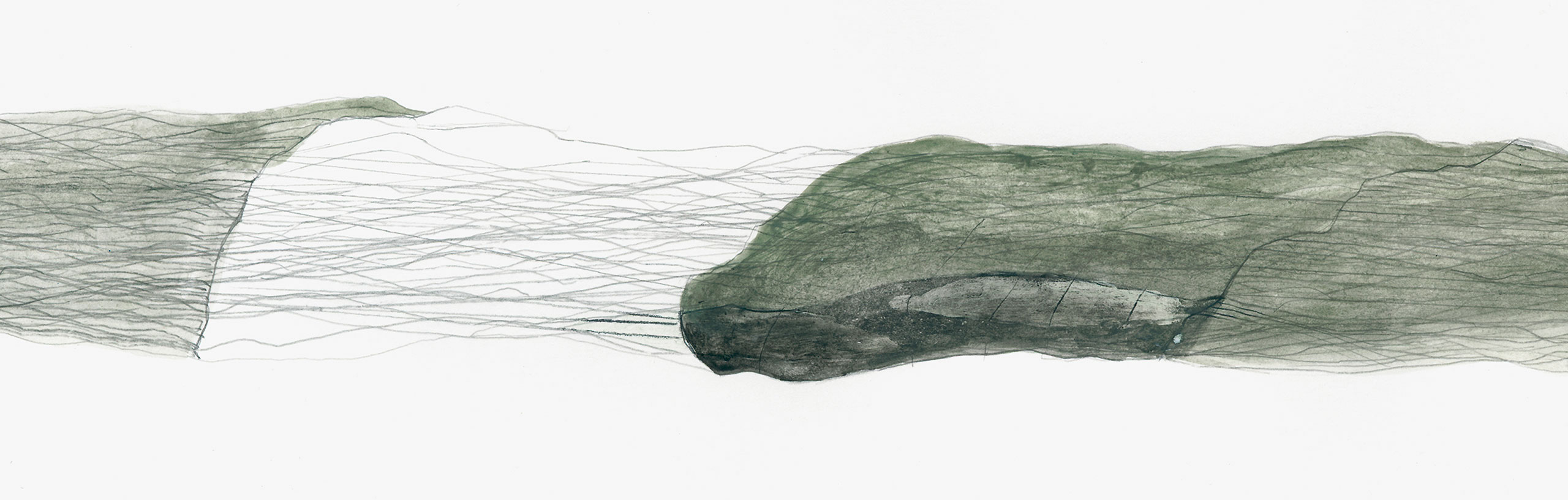
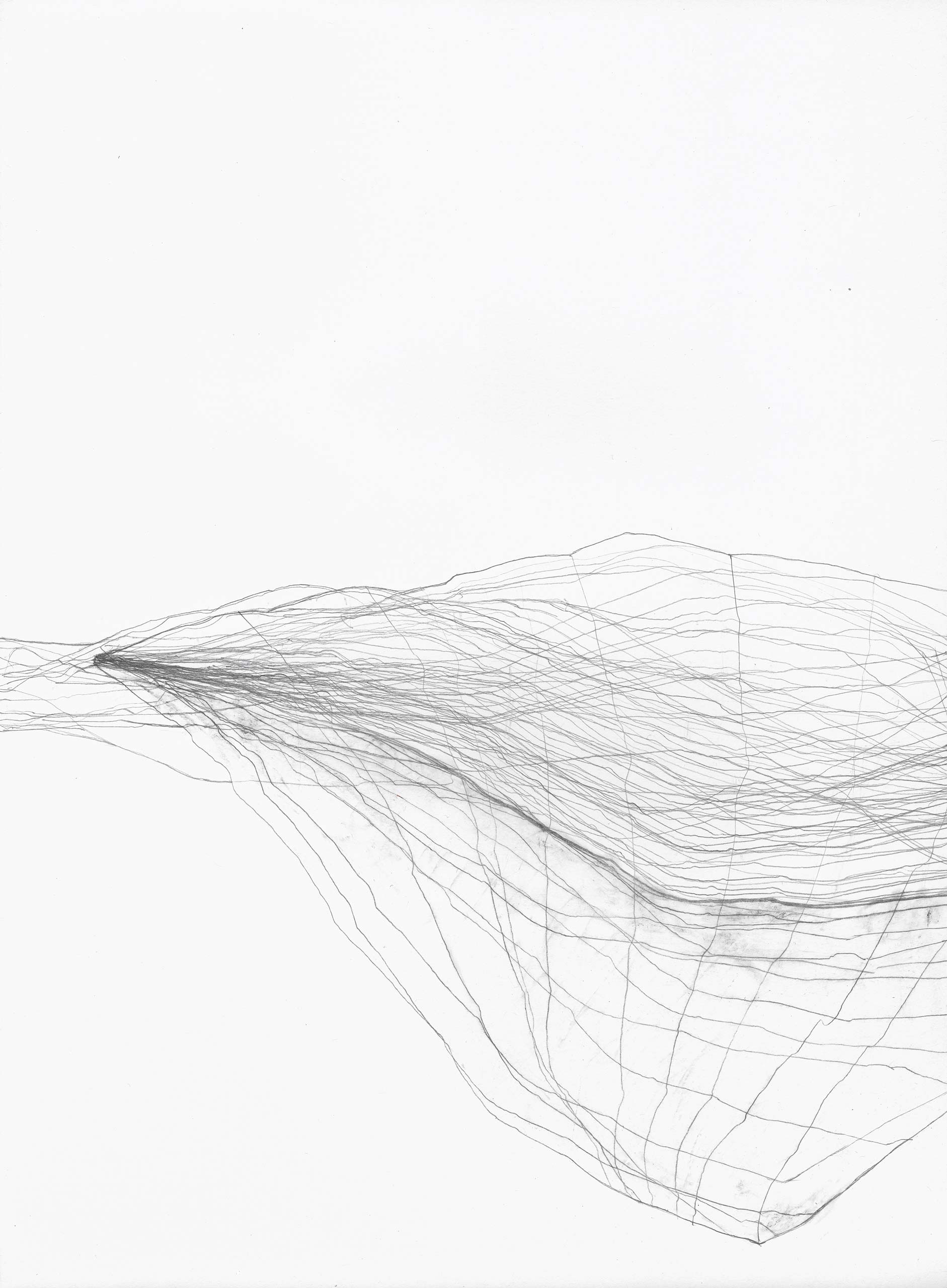
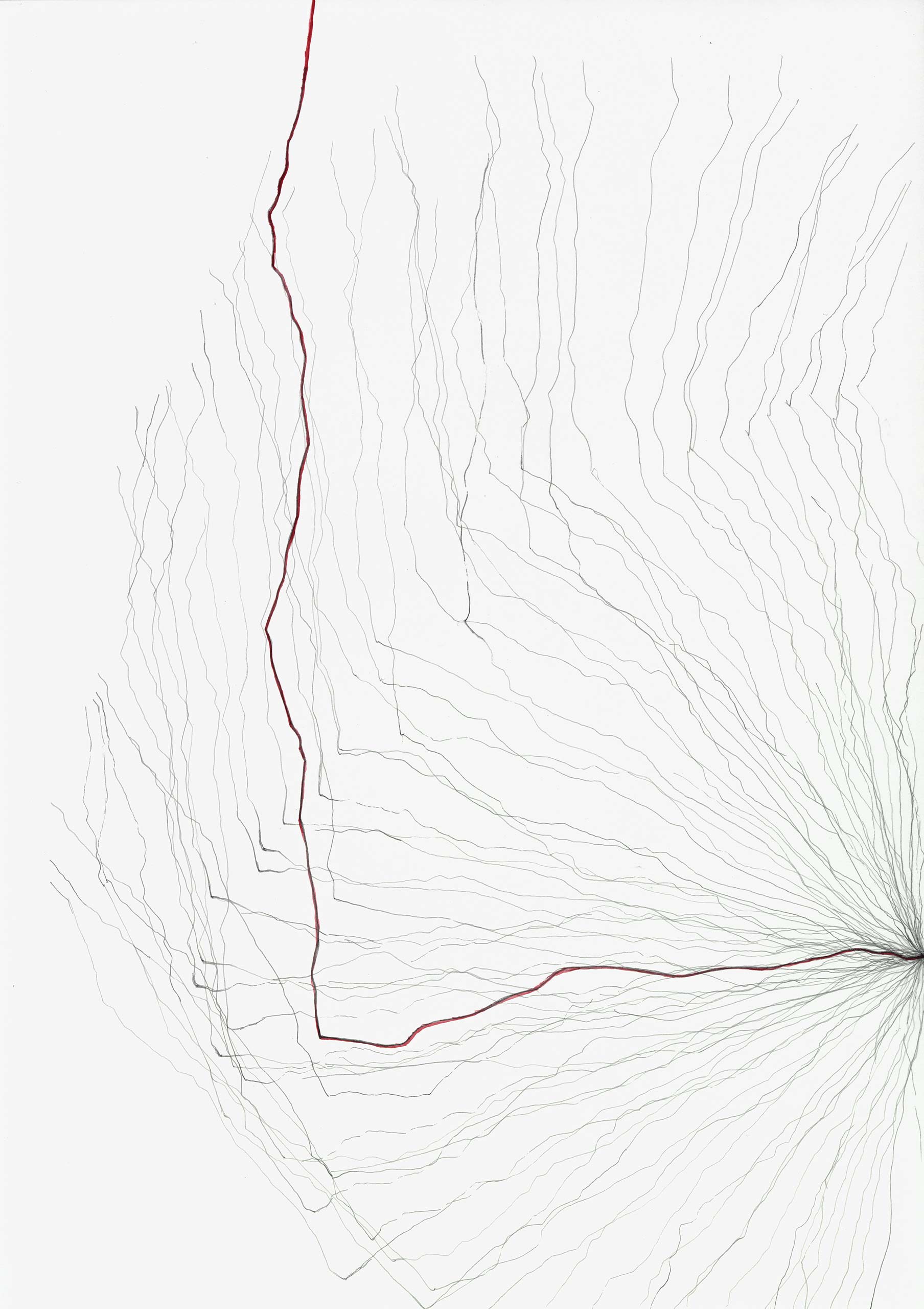
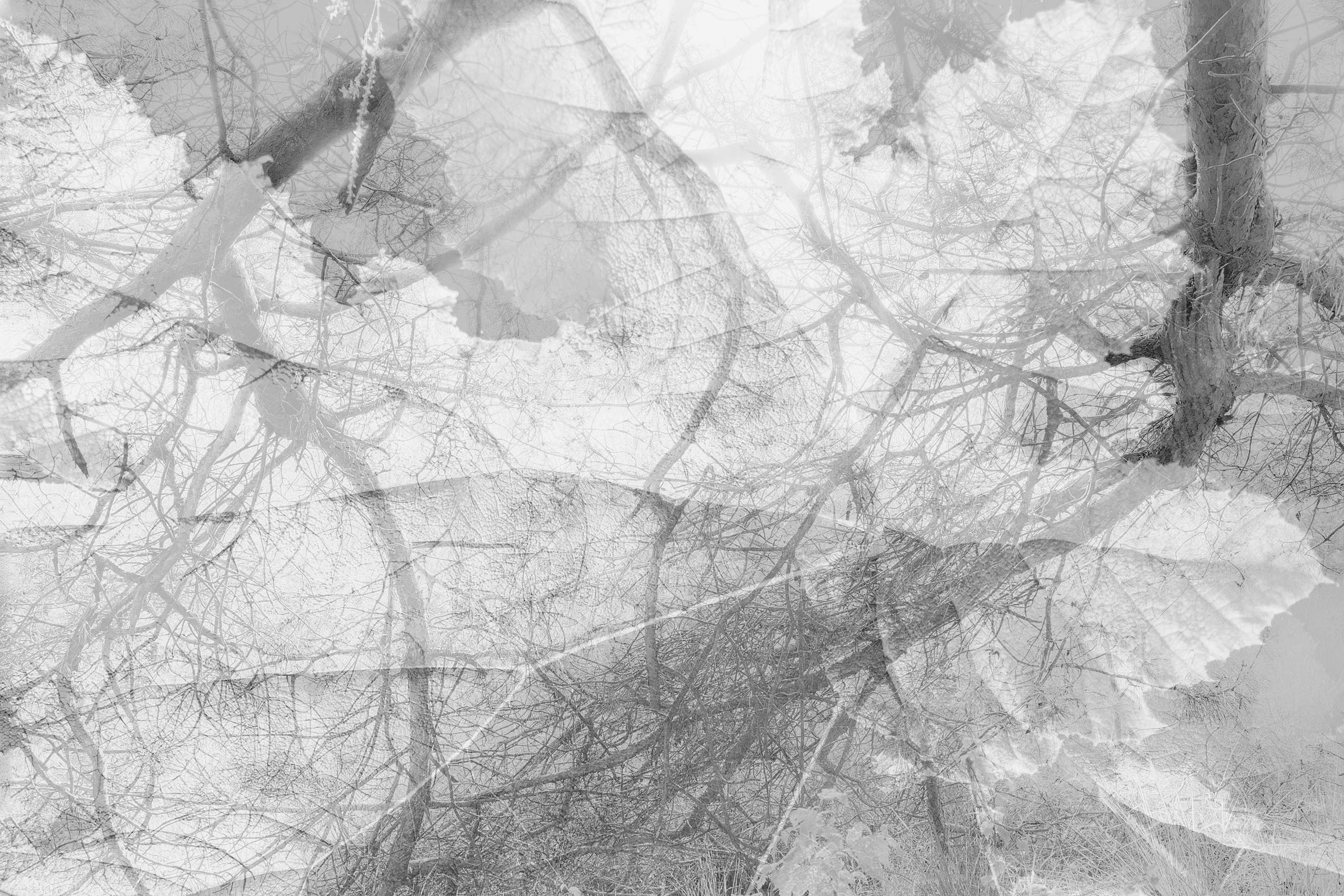
Doris Kaiser has also applied this method of translation to her drawings and therewith once more emphasized her conceptual interests. The contours of branches, leaves and other objects found in nature and in her everyday surroundings determine what course the lines will take. Over and over again a branch, stone or leaf is intuitively placed on the paper and the outline partially traced with a lead or colour pencil. Linear force-fields result and shapes are suggested. Additional interventions with colours set formal highlights and provide additional dimensions to the spatial webbing. One believes one can make out a vessel, a female nude or the veins of a rock. Although the lines in the drawings do not say anything about a particular hand, do not bear witness to the artist, do not provide a description of reality, they nevertheless hint at a narrative and open, far more than is the case in the sculptural works, a field of associations. Nature’s power to shape, determined equally by logical consistency and randomness, echoes distantly in these drawings.[4]
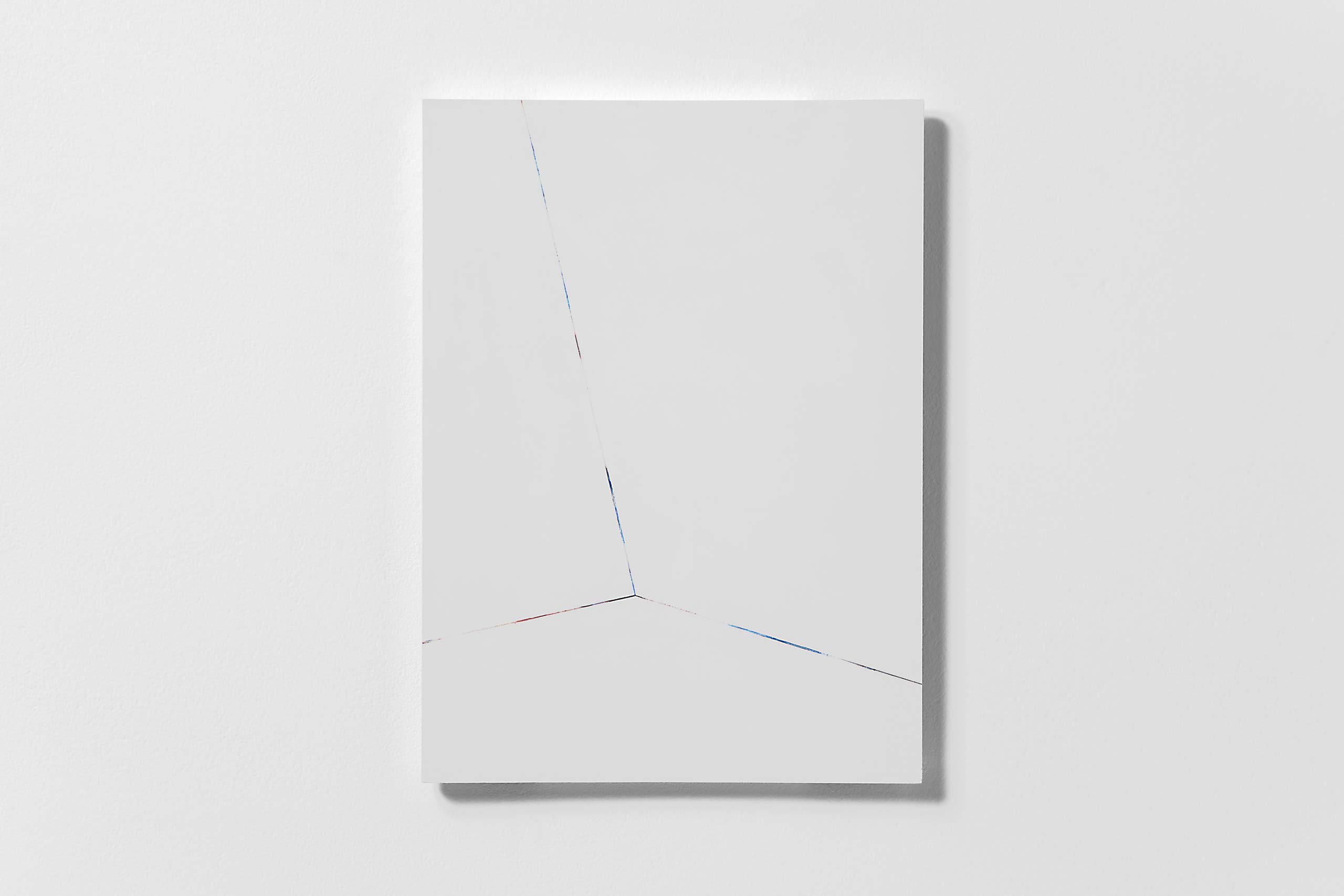
The clear, sharp-edged, at times gently curving contours determine the linear language of the sculptural works as well as the space-filling installations and tell of three-dimensional structures, of tension, fragile conditions and indeterminate spatiality. Occasionally, the addition of colour emphasises the fundamentally linear disposition of the works. A line can even become an actual shape-defining element and create tension as in an actual space.
What one expects to see on the paper, an individual trace of the artist, is something one presumes to encounter in some of the sculptural works. A dark, straight line applied by what looks like drybrush, cuts across the white colour of the three-dimensional form, turning it, like in a drawing, into a surface. Although the handling of line, which is full of character, promises individuality and authorial definition, the everyday technique of writing by hand seems here rather to have changed into a spiritual practice, with the writer retreating behind its meditative regularity. Such lines, which are reminiscent of calligraphy, are in fact a result of the sculptural process. They are traces of concluded material lines made of clay, which were in part formed by chance and in part brushed onto the base of the mould. When the form is removed from the mould, residual clay remains in the plaster, which suggests this special aspect of handwriting, between a meditative and constructive practice.
Whether one is viewing Doris Kaiser’s drawings or the sculptures, it is always the line that predominates. Throughout centuries, the line has been a familiar form of expression. It can be an idea and a concept, report seismographically on emotional states or be an attitude, a vision of future life such as in Art Nouveau. In Doris Kaiser’s pieces the line becomes the constitutive instrument that helps make the work accessible to the viewer. The line maintains a balance between presence and dissolution. It represents perception as an instrument of cognition, it gives the eye something to hold onto, and it kindles a broadly defined field of meaning. So, Doris Kaiser’s work can also be read so that is almost solely defined through the line – and at the same time is anything but.
Sylvia Martin
[1] Exhib. cat. Gegen den Strich. Neue Formen der Zeichnung, eds. Markus Heinzelmann, Matthias Winzen, Staatliche Kunsthalle Baden-Baden in Kooperation mit dem Siemens Arts Program, Baden-Baden 2004.
[2] Exhib. cat. Nichts. Nothing, eds. Martina Weinhart, Max Hollein, Schirn Kunsthalle Frankfurt, Frankfurt am Main 2006.
[3] Wolfgang Ullrich, Vom Klassizismus zum Fertighaus. Ein Lehrstück aus der Geschichte der Farbe Weiß, in: ders. und Juliane Vogel (Hg.), Weiß, Frankfurt am Main 2003, S. 214–230.
[4] Hartmut Böhme, Kräfte und Formen in der Geo-Ästhetik, in: Ausst. Kat. Die Kräfte hinter den Formen, hg. v. Beate Ermacora, Helen Hirsch, Magdalena Holzhey, Galerie im Taxispalais, Innsbruck, Kunstmuseen Krefeld, Kunstmuseum Thun 2015–2016, S. 23–36.
published in the catalogue “An allen Tagen…” pp. 79/80
Edited by: Hanspeter Dähler / Kunstforum Solothurn and Doris Kaiser, 2018
Biography
- 1958 born in Trier, lives and works in Grefrath und Krefeld
- 1979–1981 Ecole des Arts et Métiers, Luxemburg
- 1981–1988 Studium an der FH Niederrhein, Krefeld
- 2001–2022 Teaching positions at the Hochschule Niederrhein, FB Design
- 2009/12/15/18 Juror for the Young Talent Award “Frechener Keramik Preis”, der Kulturstiftung Frechen
- since 1996 Kunst am Bau-Projekte
Awards
- 2025 Projektförderung des Krefelder Kulturbüros
- 2024 Arbeitsstipendium Stiftung Kunstfonds, Bonn
- 2023 Projektförderung Kulturfonds Krefeld 2023
- 2022 Stipendium NEUSTART KULTUR des Deutschen Künstlerbundes
- 2020/21 Stipendium des Ministeriums für Kultur und Wissenschaft des Landes Nordrhein-Westfalen
- 2020 Mikrostipendium des Frauenkulturbüro NRW
- 2006 Internationale Biennale de la Sculpture en Céramique, Mamer, Luxemburg, 1. Preis
- 1999 Künstlerinnenpreis des Landes Nordrhein-Westfalen
- 1994 Arbeitsstipendium des Europäischen Keramischen Werkzentrums `s-Hertogenbosch, Niederlande
- 1993 Arbeitsstipendium des Landes Schleswig-Holstein
- 1988 Elisabeth-Schneider-Preis “Die Skulptur aus Ton” 1. Preis
- 1987 Zeitgenössische Keramik Offenburg, 1.Preis
- 1986 Elisabeth-Schneider-Preis “Die Skulptur aus Ton”, Freiburg, 2. Preis
Works in public collections
- Aachen, Junge Kunst aus NRW, ehemalige Reichsabtei
- Coburg, Kunstsammlung der Veste Coburg
- Düsseldorf, Hetjens Museum
- Frankfurt, Museum Angewandte Kunst
- Frechen, Keramion
- Genf, Musée Ariana
- Kaiserslautern, Museum Pfalzgalerie
- Karlsruhe, Badisches Landesmuseum
- Karlsruhe, Regierungspräsidium Nordbaden
- Krefeld, Kunstmuseen Krefeld
- Mainz, Kunstsammlung des Landes Rheinland-Pfalz
- Stuttgart, Württembergisches Landesmuseum
- `s-Hertogenbosch, Museum het Kruithuis
more information: www.doris-kaiser.de